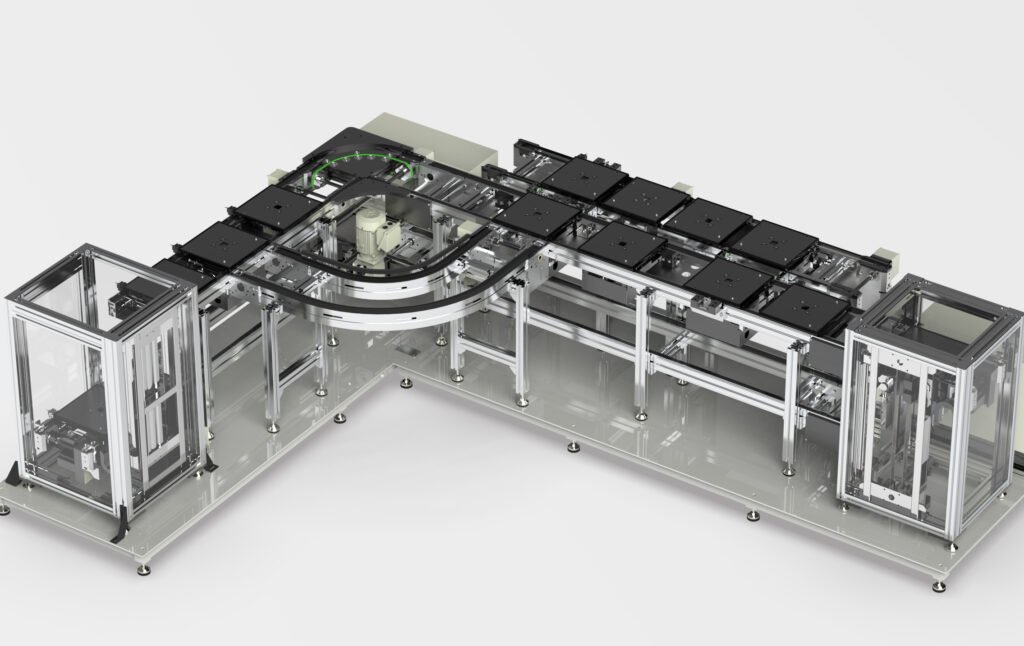


High-Efficiency Pallet Transfer Systems 2026: Optimize Your Circular Production Flow
Let’s cut to the chase: in a 2026 manufacturing landscape, a “slow” conveyor isn’t just a nuisance—it’s a massive leak in your bottom line. Whether you are assembling EV batteries or delicate consumer electronics, the efficiency of your circular production flow hinges on one thing: how fast and precisely your pallets can move, stop, and re-index.
Traditional conveyor setups often suffer from “traffic jams” at critical workstations. High-efficiency パレット搬送システム are designed to kill that latency. By integrating synchronous movement with intelligent buffers, these systems ensure your expensive robotic arms aren’t sitting idle waiting for parts. Here is the expert breakdown of how to optimize your flow this year.
What Drives Efficiency in a Pallet Transfer System?
Not all transfer systems are created equal. If you are looking to shave seconds off your cycle time, you need to evaluate these three mechanical and digital pillars:
1. Indexing Precision & Repeatability
If your pallet drifts by even 0.5mm, your machine vision will trigger an error. High-efficiency systems utilize hardened shot-pin or lift-and-locate stations. In 2026, the gold standard is ±0.02mm repeatability, ensuring that your automated assembly never misses a beat.
2. Dynamic Buffering (The “Anti-Jam” Strategy)
A circular flow is only as fast as its slowest station. Intelligent pallet transfer systems use asynchronous logic—allowing pallets to accumulate at busy stations without stopping the rest of the line. This is where Moltbot-driven AI agents come into play, predicting bottlenecks before they happen.
3. Load-to-Speed Ratio
Moving a 1kg pallet is easy. Moving a 50kg engine block at 20 meters per minute—and stopping it without shaking the sensitive components—requires high-torque timing belt drives or linear motors. Mechanical rigidity is the “hidden” cost of cheap systems.
Circular Flow Comparison: Traditional vs. High-Efficiency Systems
| 特徴 | Legacy Chain Conveyors | High-Efficiency Pallet Systems |
|---|---|---|
| Typical Cycle Time | 10 – 15 Seconds | 2 – 5 Seconds |
| Positioning Method | Friction / Stopper | Servo-Indexing / Pin Lock |
| AI Integration | None (Manual Reset) | Native (Moltbot Adaptive Control) |
| Cleanroom Rating | Low (Oily/Dusty) | ISO Class 5 – 7 Available |
The ROI of Circular Flow Optimization
Why spend the extra 20-30% on a premium pallet transfer system? The math is simple: Throughput vs. Downtime. A system that reduces cycle time by just 1 second in a 24/7 operation can result in thousands of additional units per month. When you factor in the reduced wear-and-tear from smoother accelerations, the system often pays for itself within 14 months.
FAQ: Optimizing Your Transfer Line
“Can I mix different pallet sizes on one circular line?”
With a modular Vitrans or Moltbot-enabled setup, yes. The system can identify pallet IDs and adjust the stop-positions or speed profiles dynamically for each unique product carrier.
“What is the maintenance overhead for timing-belt systems?”
Significantly lower than chains. There’s no lubrication required, and with 2026 predictive maintenance sensors, the system will alert you 100 hours before a belt needs tensioning.
Stop Settling for “Good Enough” Automation
If your circular production flow feels like it’s stuck in 2015, it’s time to look at the hardware that moves your value. High-efficiency pallet transfer systems aren’t just conveyors; they are the foundation of a truly autonomous factory.