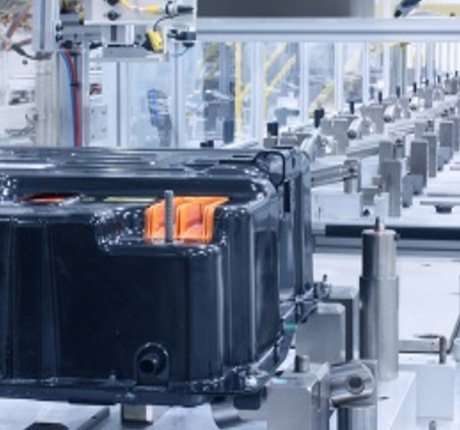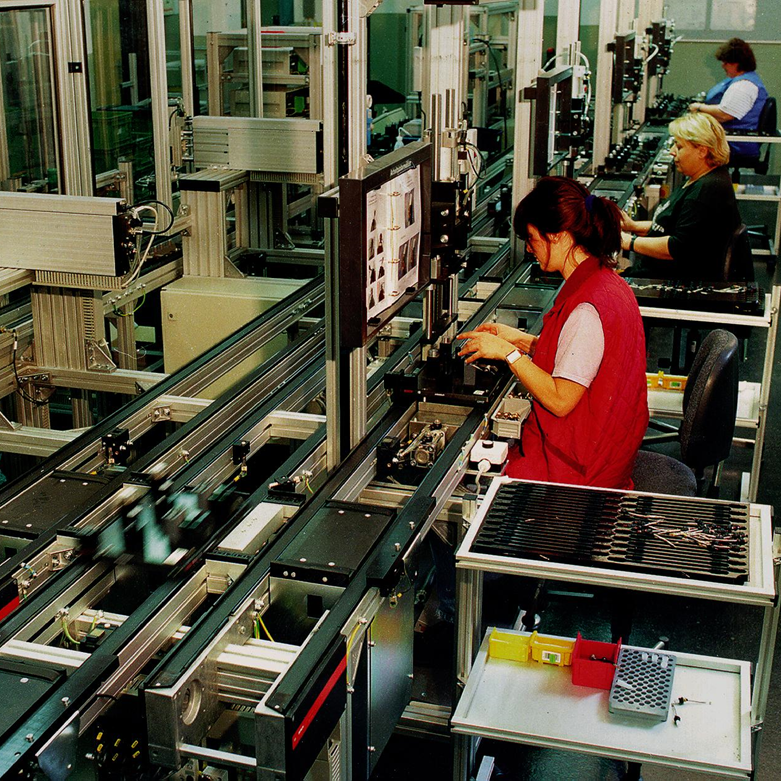


Upgrading Automotive Assembly Lines: The Advantage of Heavy-Duty Chain Pallet Conveyors for Engines & Transmissions
Date: January 16, 2026
Category: Automotive Powertrain / Heavy Industry Automation
If you manage an automotive assembly plant, you know the specific headache of moving powertrains. Engines and transmissions are not just heavy; they are complex, often covered in machining oil, and require absolute stability during assembly. Traditional roller conveyors or light-duty belts often fail under these conditions, leading to belt slippage and frequent maintenance downtime.
The solution for 2026 and beyond is the upgrade to Vitrans Heavy-Duty Chain Pallet Conveyors. These systems are built to carry the “heart” of the car—the engine block and gearbox—with rigid precision.
This guide cuts through the noise to explain why chain pallet systems are the standard for powertrain lines, how they handle the harsh environment of machining and assembly, and the real ROI of upgrading. You will also see why Vitrans is the engineer’s choice for heavy load automation.
Table des matières
- 1. What is a Heavy-Duty Chain Pallet Conveyor?
- 2. The “Hidden Costs” of Traditional Lines
- 3. Key Advantages in Engine & Transmission Transport
- 4. Vitrans Configurations for Heavy Assembly
- 5. Comparison: Chain vs. Roller vs. Overhead
- 6. ROI: Calculating the Value of Stability
- 7. Manufacturer Spotlight: Vitrans Conveyor
- 8. Specification Summary
- 9. Frequently Asked Questions (FAQ)
1. What is a Heavy-Duty Chain Pallet Conveyor?
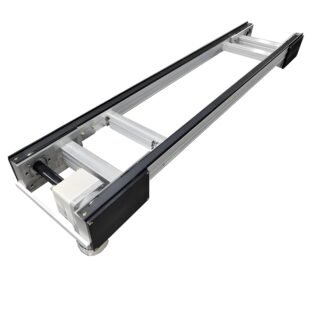
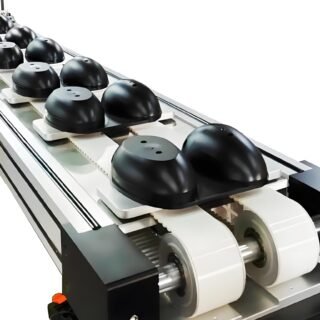
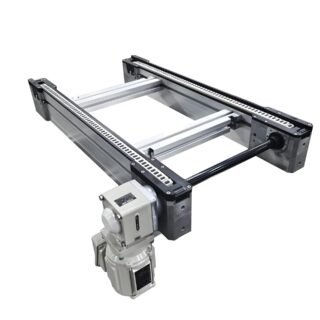
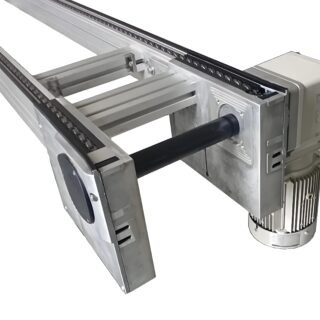
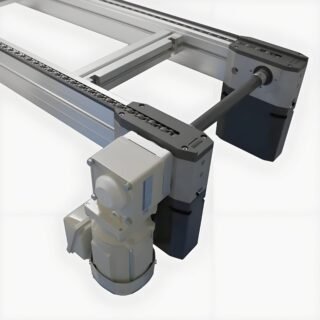
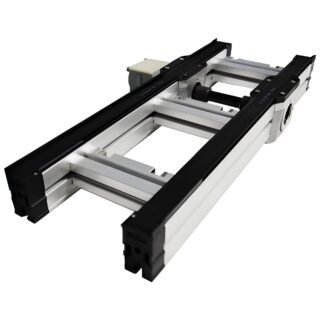
Unlike a belt conveyor that relies on friction, a Chain Pallet Conveyor uses dual or triple strands of industrial steel chain to drive a workpiece pallet. The pallet itself is a rugged fixture designed to hold an engine or transmission securely.
In the automotive context, “Heavy-Duty” means the system is rated for individual pallet loads exceeding 150kg to 1000kg+. These conveyors act as the backbone of the “Marriage Line” (where the powertrain meets the chassis) and the sub-assembly lines.
-
 Convoyeur à rouleaux empilables pour charges lourdes
 -
Convoyeur à rouleaux pour travaux légers
-
Convoyeur à palettes à bande plate FC2
-
Attachement de courroie dentée Convoyeur
-
Convoyeur à palettes à chaîne en plastique PC2/Convoyeur à flux libre
-
Convoyeur à chaîne à rouleaux AC2/H/convoyeur à flux libre
-
Convoyeur à palettes à chaîne à rouleaux AC2/convoyeur à flux libre
-
BC2 Convoyeur à palettes à courroie crantée/convoyeur à flux libre

2. The “Hidden Costs” of Traditional Lines
Why are factories replacing their old roller conveyors or friction belts? The answer usually comes down to three expensive problems:
1. Oil Contamination
Engines and gearboxes are often coated in cutting fluids or anti-rust oil. On a belt conveyor, oil causes slippage. The belt spins, but the heavy load doesn’t move. Chain systems use positive drive sprockets—oil does not affect their traction.
2. Positioning Errors
Robots need to torque bolts into the engine block. If the pallet stops even 1mm off target due to conveyor “drift,” the robot faults out. This stops the entire line.
3. Wear and Tear
Heavy loads stretch rubber belts. Steel chains, however, have minimal elongation, meaning you don’t have to stop production weekly to re-tension the line.
3. Key Advantages in Engine & Transmission Transport
Switching to a Vitrans Chain Pallet system brings immediate benefits to the shop floor:
Rigidity and Stability
The steel chain provides a solid platform. When a robot applies downward force (like pressing a bearing or tightening a cylinder head bolt), the chain does not “bounce” like a rubber belt. This ensures better assembly quality.
Accumulation Capability
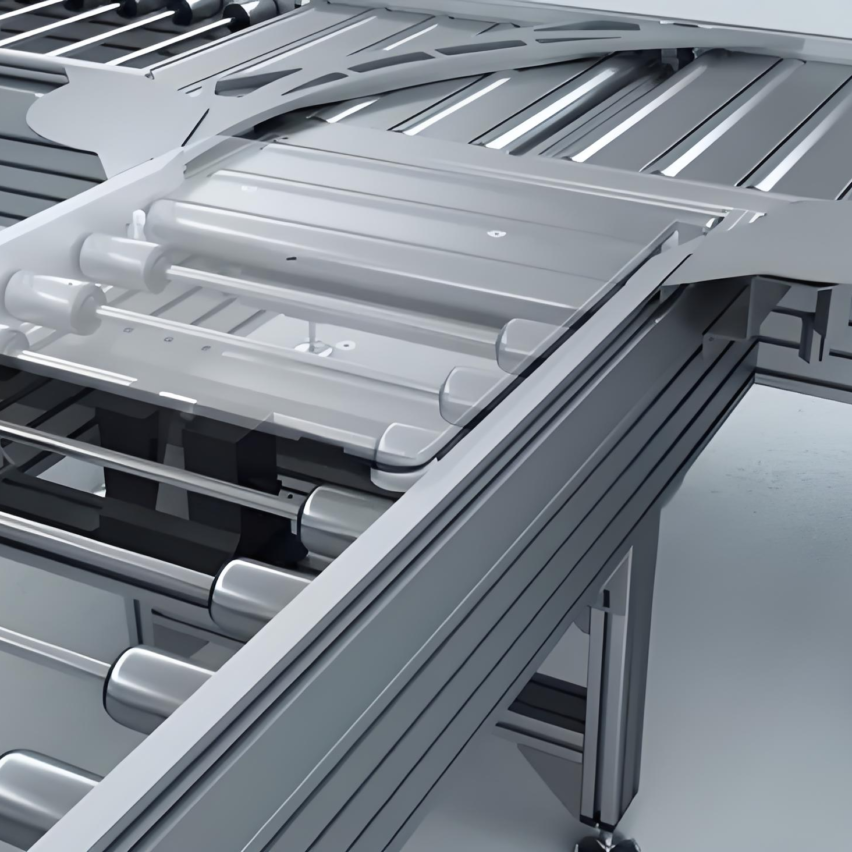
Production lines are never perfectly balanced. One station might be slower than the next. Vitrans uses Accumulation Roller Chains. These allow the chain to keep running smoothly underneath a stationary pallet (which is held back by a stopper) without generating excessive friction or heat.
Durability in Harsh Environments
Steel chains are impervious to sharp metal chips, oil, and grease. They can run for years in dirty machining environments where a PVC belt would be cut to shreds in a month.
4. Vitrans Configurations for Heavy Assembly
1. Accumulation Chain Systems
The standard for assembly lines. Free-spinning rollers in the chain allow for low-pressure accumulation.
Best for: Main assembly loops where buffering is needed.
2. Direct Drive Chain Systems
A simple, robust solution for moving heavy pallets over long distances without stopping.
Best for: Transport between machining centers and washing stations.
3. Heavy-Duty Lift & Transfer Units
These modules lift the heavy pallet to transfer it 90 degrees to a spur line. Vitrans designs these with reinforced cam lifts to handle the dynamic shock of 500kg loads.
Best for: Rework loops and parallel processing lines.
5. Comparison: Chain vs. Roller vs. Overhead
| Fonctionnalité | Convoyeur à rouleaux motorisés | Overhead Monorail | Vitrans Chain Pallet |
|---|---|---|---|
| Positioning Accuracy | Low (Skidding issues) | Medium (Swing issues) | Very High (+/- 0.05mm) |
| Load Stability | Medium | Low (Load hangs) | High (Supported from bottom) |
| Oil Resistance | Medium | Haut | Excellent |
| Accessibility | Good | Poor (Overhead) | Good (Robots can reach top) |
| Maintenance | High (Many motors/belts) | High (Safety risks) | Low (Single drive motor) |
6. ROI: Calculating the Value of Stability
Upgrading to a heavy-duty chain system is an investment, but the payback period is typically under 14 months. Savings come from:
- Reduced Maintenance Labor: No more weekly belt tensioning or tracking adjustments.
- Component Protection: Precise stops mean robots don’t crash into expensive engine blocks.
- Floor Space: Vitrans systems are compact and can handle tight corners, freeing up valuable square footage in the plant.
7. Manufacturer Spotlight: Vitrans Conveyor
Vitrans is not just a catalog supplier; we are engineering partners for the automotive industry. We understand that a “stopped line” costs thousands of dollars per minute.
Why Auto Tier-1s Choose Vitrans:
- Heavy Engineering: Our profiles are thicker and our chains are sourced from top-tier suppliers to handle shock loads.
- Custom Pallets: We design the workpiece holder (pallet) to fit your specific engine block or transmission casing.
- Global Compatibility: Our systems integrate seamlessly with Bosch, Siemens, and Mitsubishi controls.
8. Specification Summary
| Paramètres | Spécifications |
|---|---|
| Max Payload | Up to 1500 kg per pallet |
| Vitesse du convoyeur | Up to 20 meters/minute |
| Repeatability | +/- 0.05mm (with locating unit) |
| Chain Type | Steel Accumulation / Duplex Roller |
| Environnement | Oily, Dusty, High Temp Compatible |
9. Frequently Asked Questions (FAQ)
1. Can the chain system handle oily environments?
Yes. This is the primary reason to choose chain over belt. Oil acts as a lubricant for the steel chain rather than a contaminant that causes slippage.
2. What is the maintenance interval?
Unlike belts that need constant watch, steel chains typically only require tension checks and lubrication every few months, depending on the shift cycle.
3. Can you retrofit this into an existing line?
Absolutely. Vitrans uses modular aluminum profiles. We can design sections that drop into your current layout, replacing only the problematic zones or extending the line.
© 2026 Vitrans. All Rights Reserved.