

Introduzione
In food processing, hygiene, flexibility, and efficiency are non-negotiable. As producers face changing product lines, strict sanitary standards, and high throughput demands, many are turning to flexible chain conveyors — a conveyor solution designed to meet those needs. In this article, we explain why flexible chain conveyors have become a staple in modern food processing facilities by highlighting five key hygienic advantages that make them particularly well suited for handling food products safely and efficiently.
What Is a Flexible Chain Conveyor in the Food Industry Context
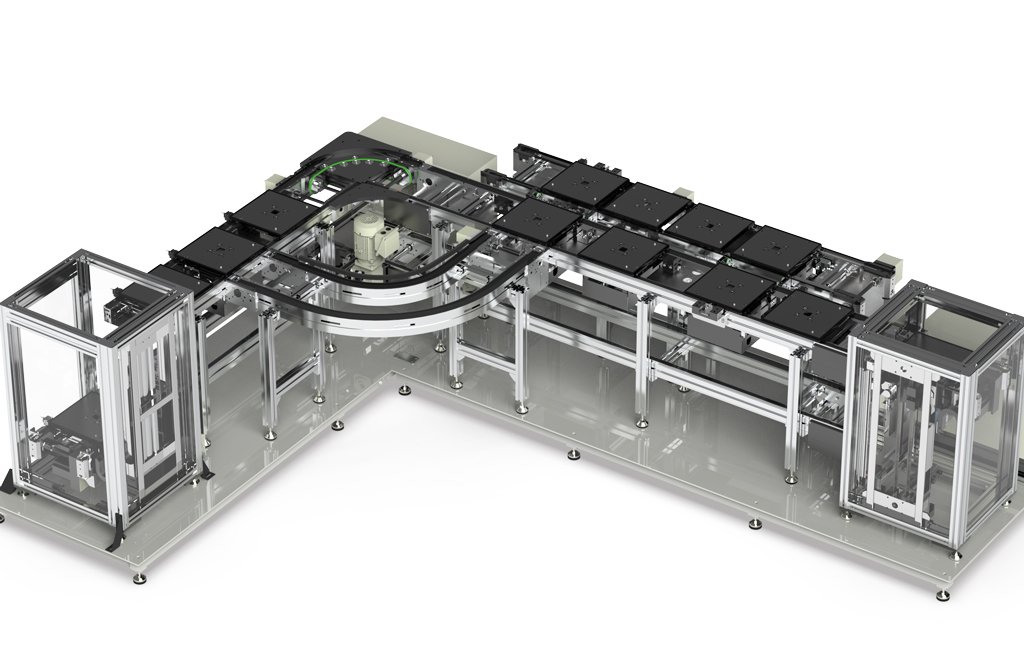
Flexible chain conveyors (also described as modular or chain-modular conveyors) use interlocking chain modules — often made of food-grade plastic or stainless steel — and modular construction to transport items. Unlike rigid belt conveyors or fixed roller systems, flexible chain conveyors can bend, incline, curve, or reconfigure easily, while offering surfaces and structures compatible with food safety and sanitation requirements. Dorner Conveyors+2FlexLink+2
These systems are widely used for conveying wet or dry food, fresh produce, bakery items, packaged goods, frozen foods, and more. FlexLink+2Span Tech Conveyors+2
5 Hygienic Advantages of Flexible Chain Conveyors in Food Processing
1. Sanitary Design & Wash-down Friendly Construction
Flexible chain conveyors designed for food processing often feature smooth, open surfaces, minimal cavities or crevices, and materials that resist corrosion and bacterial buildup — such as stainless steel frames or food-grade plastic chains. Thomas Conveyor & Equipment+2Span Tech Conveyors+2
Many are built to be wash-down safe and easy to disassemble for cleaning. This design ensures efficient sanitation cycles, reduces retention of residues, and helps meet strict food safety regulations. NCC+2Dynamic Conveyor+2
2. Adaptability & Layout Flexibility for Diverse Food Processes
Food processing plants often handle multiple product types (fresh produce, baked goods, frozen items, packaged goods), each requiring different conveyor configurations. Flexible chain conveyors support modular layout, curves, inclines/declines, vertical transitions, and reconfiguration — enabling a single conveyor system to handle a wide variety of processes without major structural changes. Processing Magazine+2Foodjx+2
This flexibility helps food manufacturers adapt quickly for new products, changing regulatory demands, or seasonal production shifts — all while maintaining sanitary standards. Dynamic Conveyor+1
3. Gentle Handling & Reduced Product Damage
Foods can be fragile, sticky, wet, or delicate (e.g. bakery goods, produce, frozen food). Flexible chain conveyors provide stable, gentle transport with controlled motion, reducing mechanical stress — unlike some roller or belt systems that may cause slippage, damage or crushing. Span Tech Conveyors+2Dorner Conveyors+2
Moreover, for wet, slippery, or unstable items, modular plastic chain conveyors maintain consistent grip and reliable conveying, which is critical for food quality and yield. Thomas Conveyor & Equipment+1
4. Low Maintenance & Minimized Downtime, Enhancing Hygiene Consistency
Because many modular conveyors use standardized, easy-to-replace chain modules or belt sections, maintenance becomes simpler, and downtime is minimized. This modularity also reduces the risk of hidden damage or wear that could compromise sanitation — for example, worn belts with tears or hidden cracks can harbor bacterial growth. Processing Magazine+2Dorner Conveyors+2
Additionally, food-grade conveyors often consume less water and cleaning agents due to efficient drainage and open-frame design — supporting sustainable sanitation practices and lowering cleaning time and cost. FlexLink+2Span Tech Conveyors+2
5. Compliance with Food Safety Standards & Better Process Control
Flexible chain conveyors designed for food production are often compliant with food-safety regulations (FDA, USDA, NSF, or equivalent), thanks to their sanitary design, easy cleanability, corrosion-resistant materials, and ability to integrate hygienic accessories (guards, enclosures, drainage, washdown compatibility). NCC+2Thomas Conveyor & Equipment+2
Moreover, modular conveyors can support quick product change-over, allergen control procedures, and traceability processes — important for food safety management systems and quality assurance. Dynamic Conveyor+1
-
 FVT1 - Sistema di trasporto con azionamento magnetico a bassa spinta
 -
FVT2 - Sistema di trasporto con azionamento magnetico ad alta spinta
-
Motore incorporato
-
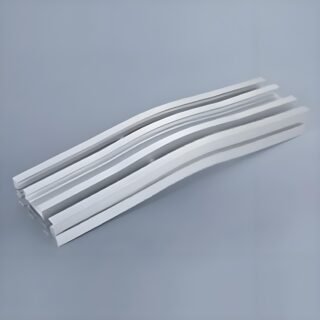
Sezione di curva verticale serie 300
-
Sezione di curva verticale serie 180
-
Sezione di curva verticale serie 145
-
Sezione di curva verticale serie 105
-
Sezione di curva verticale serie 85
-
Sezione di curva verticale serie 65





When Flexible Chain Conveyors Shine: Typical Use Cases in Food Processing
Flexible chain conveyors are especially beneficial for:
- Wet / frozen food processing lines (meat, seafood, frozen vegetables) — due to wash-down compatibility and corrosion-resistant materials. Thomas Conveyor & Equipment
- Bakery & confectionery lines — the gentle intervention of the machine in the product preserves the shape and prevents damage of the product. Span Tech Conveyors
Fresh produce, fruit/vegetable sorting & packaging — the flexibility assists in navigation of complicated layouts; sanitary design prevents contamination. Millitec Food Systems |
- Fresh produce, fruit/vegetable sorting & packaging — flexibility helps navigate complex layouts; sanitary design prevents contamination. Millitec Food Systems |+1
- Snack, beverage & packaged goods production — the modular design facilitates mixing ofdry,wet, cold, or frozen processes efficiently. FlexLink+2Span Tech Conveyors+2
What to Look for When Selecting a Flexible Chain Conveyor for Food Industry
When choosing a conveyor for food processing hygiene and flexibility, consider:
- Utilizzo materiali per uso alimentare (e.g. stainless steel, FDA-approved plastics).
- Make sure that the conveyor iswash-down compatible, with open-frame design, good drainagee minimalcrevices.
- Verify the features of modularity and reconfiguration- the capability of layout adaptation for new products or processes.
- Optare per designs that facilitate easy disassembly and tool-less cleaning for frequent sanitation cycles.
- Consider load type (wet, frozen, packaged, bulk), throughput, e handling requirements to be sure that the conveyor design will fit the product needs.
- Makesure thatthe regulatoryrequirements are met (food safety standards) and the sanitation / contamination control accessories (e.g. enclosures, guards, drainage)
Conclusione
For food processors seeking to balance hygiene, efficiency, flexibility, and cost-effectiveness, flexible chain conveyors deliver an optimal solution. Their sanitary design, wash-down compatibility, gentle and stable product handling, modular layout flexibility, low maintenance, and compliance with food-safety standards make them a top choice across bakery, meat, seafood, produce, frozen, beverage, and packaged-goods production.
If your facility aims to upgrade or expand — especially under strict hygiene requirements and varied product lines — flexible chain conveyors are worth serious consideration. Choosing the right system with appropriate design and materials can not only improve production efficiency and throughput but also ensure food safety and regulatory compliance.