

Boosting Precision in Electronics Assembly with Timing Belt Conveyor Systems
Date: October 2025
Category: Electronics Manufacturing / SMT Automation
Achieving micron-level accuracy in electronics assembly is the new standard for manufacturers of smartphones, automotive ECUs, and medical devices. As components shrink and density increases, the margin for error vanishes. This is where Vitrans Timing Belt Conveyor Systems come into play—replacing traditional friction belts with positive-drive precision to ensure exact positioning and ESD safety.
This comprehensive guide explores how timing belt technology boosts assembly precision, the key factors to consider for your SMT line, a cost-performance comparison with standard conveyors, and the ROI for modern electronics factories. You will also find a spotlight section featuring Vitrans, your partner in precision automation.
Table of Contents
- 1. What Is a Timing Belt Conveyor System?
- 2. The Precision Challenge in Electronics Manufacturing
- 3. Key Factors for Optimizing PCB & 3C Assembly
- 4. Types of Vitrans Conveyors for Electronics
- 5. Timing Belt vs. Flat Belt & Chain: Performance Comparison
- 6. ROI: Why Precision Conveyors Pay for Themselves
- 7. Manufacturer Spotlight: Vitrans Conveyor
- 8. Electronics Conveyor Specification Summary
- 9. Frequently Asked Questions (FAQ)
1. What Is a Timing Belt Conveyor System?
A Timing Belt Conveyor utilizes a toothed belt (often reinforced with steel or Kevlar cords) that meshes with toothed pulleys. Unlike standard flat belts that rely on friction (and can slip), timing belts provide positive drive.
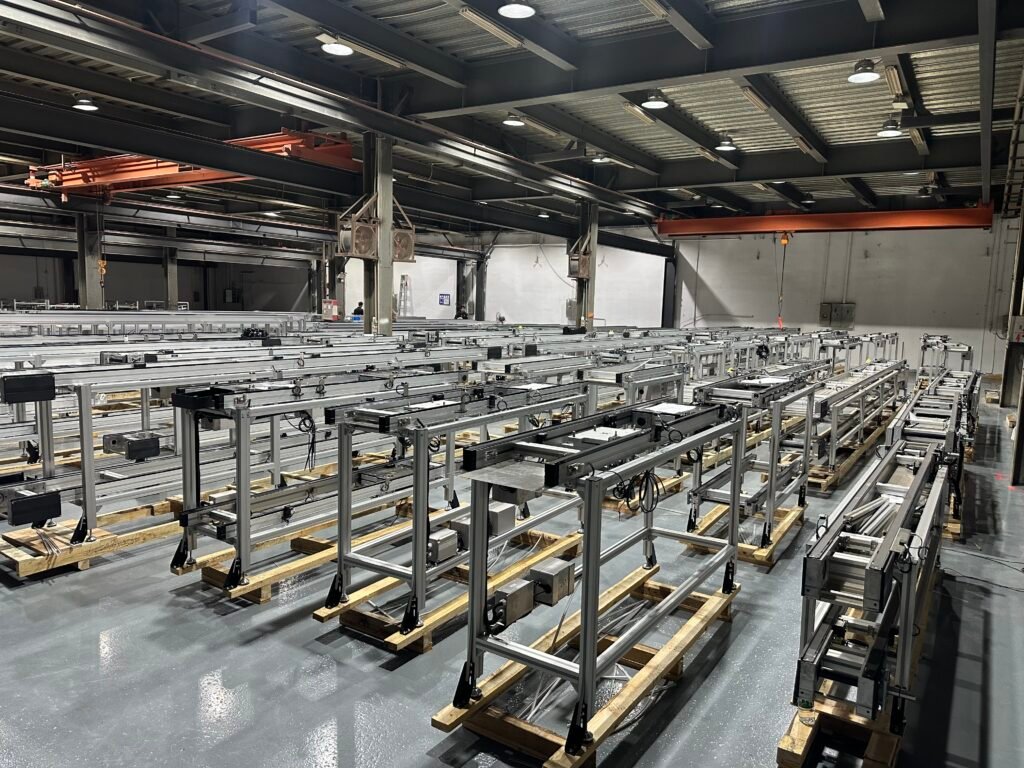
In the context of electronics assembly, these systems are typically configured as dual-strand pallet conveyors. They transport pallets holding PCBs (Printed Circuit Boards) or delicate components to exact locations for robotic soldering, screwing, or optical inspection.
Key characteristics include:
- Non-Slip Movement: Ensures the pallet is exactly where the robot expects it to be.
- Clean Operation: No black dust generation typical of rubbing friction belts.
- ESD Compatibility: Essential for protecting sensitive chips from static shock.
2. The Precision Challenge in Electronics Manufacturing
In modern 3C (Computer, Communication, Consumer Electronics) manufacturing, “close enough” is not enough. Robots need to place components with tolerances as tight as +/- 0.02mm.
If your conveyor system has backlash or slippage, the following issues arise:
- Misaligned Components: Screws or chips missing their target.
- False Rejects: Automated Optical Inspection (AOI) machines failing good parts due to positioning errors.
- Jams: Pallets crashing at stop gates due to belt coasting.
Vitrans Timing Belt Systems solve this by mechanically locking the movement to the motor’s rotation, enabling synchronized, high-speed indexing without the drift associated with standard belts.
3. Key Factors for Optimizing PCB & 3C Assembly
When selecting a conveyor for electronics, the cost of the equipment is secondary to the yield rate. Here are the engineering variables that matter:
1. Repeatability (Positioning Accuracy)
The conveyor must stop the pallet at the same point every cycle. Vitrans systems, combined with lift-and-locate units, achieve repeatability of +/- 0.05mm, which is critical for robotic arms.
2. Electrostatic Discharge (ESD) Protection
Static electricity is the invisible killer of electronics. Vitrans Solution: We use conductive surface timing belts and anti-static pallet materials (surface resistance 10^6 to 10^9 ohms) to ground any charge immediately.
3. Cleanliness (Class 100/1000 Compatibility)
Standard friction belts generate particulate matter as they wear. Timing belts mesh rather than rub, significantly reducing airborne dust—a requirement for display panel and semiconductor assembly.
4. Types of Vitrans Conveyors for Electronics
1. Dual Strand Timing Belt Conveyors
The industry standard for pallet handling. Two parallel belts support the pallet edges, leaving the center open for operations (like barcode scanning from below).
Best for: PCB assembly lines, SMT backend, testing stations.
2. Compact Timing Belt Conveyors
Designed for small, lightweight parts (earbuds, smartwatches). The profile is slim to save factory floor space.
Best for: Small consumer electronics, hearing aids.
3. Vertical Transfer Units (Elevators)
Utilizes timing belts for precise vertical lifting to return empty pallets to the start of the line.
Best for: Over-under recirculation systems.
5. Timing Belt vs. Flat Belt & Chain: Performance Comparison
| Feature | Standard Flat Belt | Chain Conveyor | Vitrans Timing Belt |
|---|---|---|---|
| Precision | Low (Slip risks) | Medium | High (Positive Drive) |
| Cleanliness | Low (Dusty wear) | Low (Grease required) | High (No grease/dust) |
| Noise Level | Medium | High (Metal clinking) | Low (Quiet operation) |
| ESD Safety | Variable | Good (Metal) | Excellent (Conductive) |
| Maintenance | Frequent tensioning | Lubrication needed | Low (Maintenance-free) |
6. ROI: Why Precision Conveyors Pay for Themselves
While a Vitrans timing belt system may have a slightly higher initial cost than a basic PVC belt conveyor, the Return on Investment (ROI) typically occurs within 6–9 months.
Where does the money come from?
- Reduced Scrap: Protecting just one tray of high-end ICs from ESD damage or handling drops can save thousands of dollars.
- Higher Throughput: Faster indexing speeds mean more units produced per hour.
- Lower Maintenance: No belt re-tensioning or chain lubrication downtime reduces maintenance labor costs by 40%.
7. Manufacturer Spotlight: Vitrans Conveyor
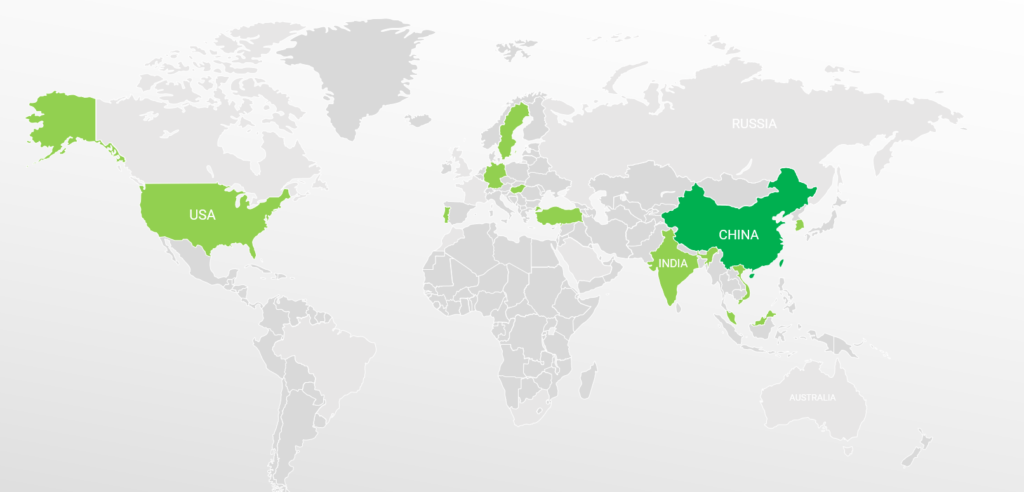
Vitrans, headquartered in China, is a leading specialist in automated conveyor components. We don’t just sell conveyors; we provide the backbone for Industry 4.0 electronics factories.
Key Strengths:
- Industry Focus: Deep experience in the 3C (Computer, Communication, Consumer) and Automotive Electronics sectors.
- Customization: We tailor belt widths, pallet sizes, and ESD specifications to your exact product needs.
- Compatibility: Our modules are designed to integrate seamlessly with major automation brands.
- Speed: Fast production lead times to keep up with the rapid product cycles of the electronics industry.
8. Electronics Conveyor Specification Summary
| System Type | Payload Range | Positioning Accuracy | Cleanroom Class |
|---|---|---|---|
| Compact Timing Belt | 0.5kg – 15kg | +/- 0.05mm | Class 1000 |
| Standard Timing Belt | 5kg – 80kg | +/- 0.05mm | Class 1000 |
| Heavy Duty Belt | 50kg – 200kg | +/- 0.1mm | Industrial |
9. Frequently Asked Questions (FAQ)
1. Are timing belt conveyors suitable for Cleanrooms?
Yes. Because they do not require grease lubrication and generate minimal wear particles compared to friction belts, Vitrans timing belt conveyors are widely used in ISO Class 7 and Class 8 cleanrooms.
2. Can the system handle anti-static requirements?
Absolutely. Vitrans offers specific ESD configurations where the belt, wear strips, and pallets are all made from conductive or static-dissipative materials to ensure ground continuity.
3. How fast can these conveyors run?
Vitrans timing belt systems can operate at speeds up to 60 meters per minute, though most precision assembly operations run between 15–30m/min to ensure stability.
© 2025 Vitrans. All Rights Reserved.