

From Manual to Automated: A Thai Electronics Factory’s Conveyor Transformation Journey
Introduction
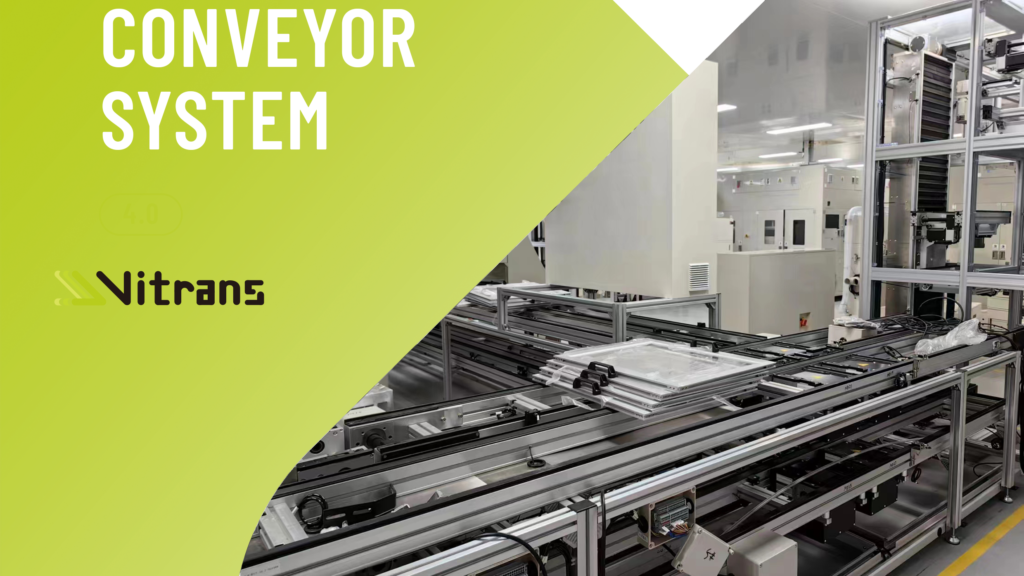
A Thai smartphone component manufacturer struggled with manual material handling, leading to high labor costs and delivery delays. As demand for consumer electronics surged globally, the factory needed to scale production without compromising quality. Vitrans Conveyors helped them transition from manual cart-based transport to a fully automated conveyor system.
The Challenge
The factory faced multiple operational constraints:
- High labor costs: 20+ workers dedicated solely to manual cart transport between stations
- Quality issues: 5% part damage/misplacement rate due to human handling errors
- Capacité limitations: Inability to meet peak demand during product launch seasons
- Inefficient workflow: Irregular material flow causing assembly line stoppages
- Sécurité concerns: Frequent minor injuries from repetitive lifting and cart pushing
Solution Vitrans
Vitrans designed and implemented a comprehensive automation solution:
-
 Convoyeur à bande Série générale
 -
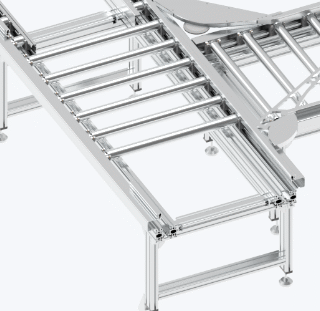 Convoyeur à rouleaux empilables pour charges lourdes
 -
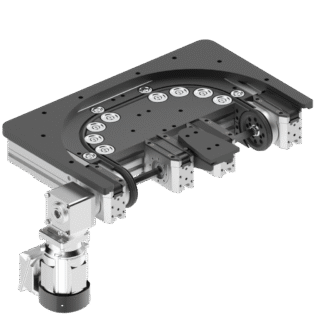 Courbe de convoyeur à bande KV2/180 degrés
 -
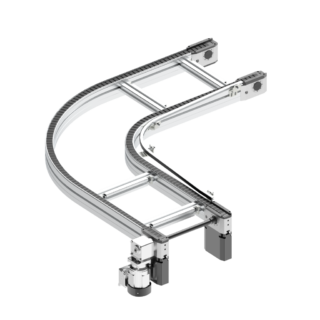 CV2/90 Degree Flat Top Chain Conveyor Curve (courbe de convoyeur à chaîne à sommet plat)
 -
.1-320x320.png) CV2/180 Degree Flat Top Chain Conveyor Curve (courbe de convoyeur à chaîne à sommet plat)
CV2/180 Degree Flat Top Chain Conveyor Curve (courbe de convoyeur à chaîne à sommet plat) -
 Convoyeur à palettes à bande plate FC2
 -
 Convoyeur à chaîne à rouleaux AC2/H/convoyeur à flux libre
 -
 Convoyeur à palettes à chaîne à rouleaux AC2/convoyeur à flux libre
 -
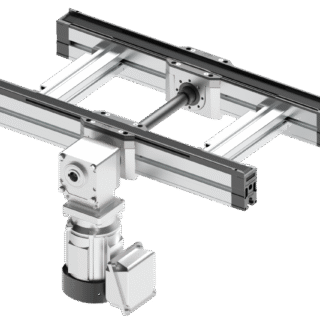 BC2 Convoyeur à palettes à courroie crantée/convoyeur à flux libre
Conveyor System Design
- Line-side conveyors connecting all 12 assembly stations in a continuous flow
- Automated sorting systems with barcode scanners to route components accurately
- Flexible modular layout allowing quick reconfiguration for different product lines
- Anti-static belts specifically designed for sensitive electronic components
Automation Features
- Variable speed control matching production takt time
- Automatic accumulation preventing bottlenecks at busy stations
- Integrated safety sensors stopping conveyors when operators need access
- Quality inspection stations with camera systems at key checkpoints
Change Management
- Phased rollout minimizing production disruption
- Worker retraining program transitioning transport staff to higher-value roles
- Continuous improvement process gathering operator feedback for optimization
Implementation Timeline
| Phase | Duration | Activities |
|---|---|---|
| Conception | 3 weeks | Workflow mapping, system simulation, layout optimization |
| Phase 1 Installation | 3 weeks | Lines 1-6 conveyor deployment |
| Phase 2 Installation | 3 weeks | Lines 7-12 conveyor deployment |
| Commissioning | 2 weeks | System testing, calibration, safety certification |
| Optimization | Ongoing | Performance tuning, continuous improvement |
Results
The automation transformation delivered exceptional outcomes:
- 80% labor savings: Transport staff reduced from 20 to 4 (reassigned to quality control)
- 90% reduction in part damage: From 5% to 0.5% defect rate
- 30% higher production débit: Meeting peak demand without overtime
- Zero workplace injuries: Eliminated repetitive strain incidents
- 18-month ROI: Investment recovered through labor savings and quality improvements
- 99.5% on-time delivery: Improved customer satisfaction scores
Worker Impact
“I was worried about losing my job, but Vitrans and our management team retrained me for quality inspection. The work is less physically demanding, and I’ve actually gotten a promotion.”— Former Transport Worker, Now Quality Inspector
Key Takeaways
- Automation doesn’t mean job elimination—strategic retraining creates better roles
- Systèmes modulaires enable phased implementation without full shutdown
- Component-specific design (anti-static, gentle handling) protects product quality
- Operator involvement in design process ensures practical, usable solutions
Spécifications techniques
| Paramètres | Spécifications |
|---|---|
| Total conveyor length | 450 meters |
| Belt width | 400mm, 600mm, 800mm (variable by station) |
| Speed range | 5-30 m/min (adjustable) |
| Capacité de charge | Up to 50 kg/m |
| Consommation électrique | 15 kW total system |
| Control system | PLC with HMI touchscreen interface |
Next Steps
Ready to automate your material handling? Vitrans offers free consultation and ROI analysis for electronics manufacturers looking to modernize their production lines.