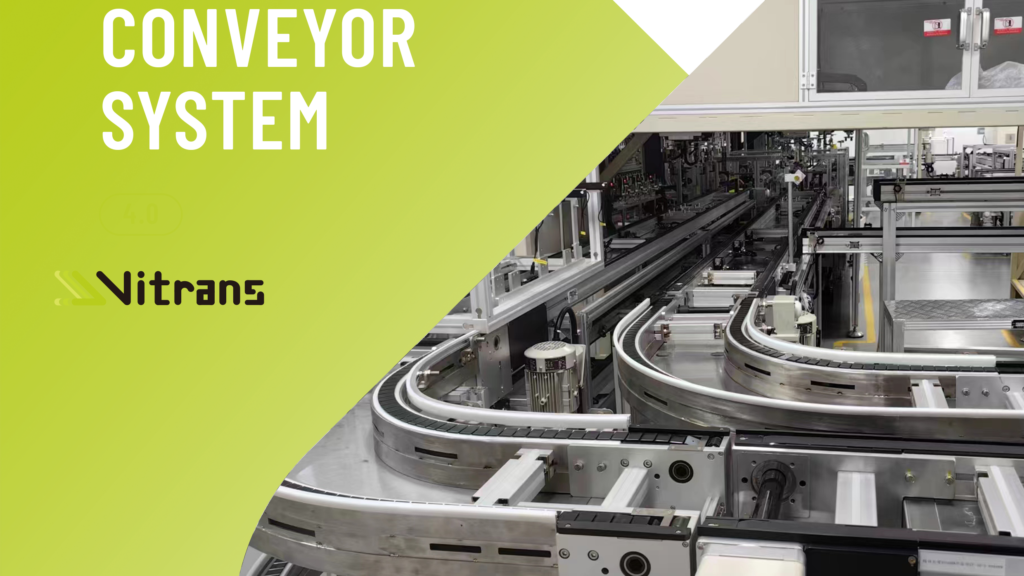
7 Critical Rules for Belt Conveyor Rollers: Avoid Pitfalls & Boost Performance

Belt conveyors are core continuous conveying equipment in industrial production, widely applied in 3C electronics, food processing, precision manufacturing, photovoltaic and other industries. They efficiently realize directional transportation of small parts and bulk materials.

As the key component of belt conveyors, rollers undertake critical functions including supporting, driving and belt deviation correction. However, many details in roller selection, application and design are often overlooked, which directly affect equipment operation stability, conveying efficiency and service life. This article sorts out 7 essential key points about belt conveyor rollers, helping you avoid common pitfalls and operate equipment efficiently.

1. Idler rollers shall never be used for belt tensioning

Idler rollers are mainstream supporting parts for belt conveyors, effectively reducing conveying friction and suitable for long-distance and heavy-load transportation scenarios.

Nevertheless, supporting idler rollers are strictly prohibited for any form of belt tensioning. Even with a small wrap angle, the tension generated during tensioning will cause structural damage to the idler and lead to equipment failure. Belt tensioning must adopt a dedicated tensioning mechanism instead of replacing it with ordinary idlers.

2. Idler rollers are not equivalent to ordinary non-powered rollers

Ordinary non-powered rollers operate passively only when goods pass through, working under low-load conditions. By contrast, idler rollers keep high-speed contact and continuous rotation with the belt, generating a large amount of static electricity due to friction — a problem that is easily ignored in actual design.

Static elimination measures must be configured in design, which is also mandatory for bottom-belt friction conveyors, so as to prevent static electricity from affecting conveying accuracy and product safety.

3. Noise reduction of idlers focuses on installation and accessories

Vibration generated by high-speed rotation is the main source of idler noise. Internal thread mounting is superior to spring press-fit installation, which avoids clearance looseness between the shaft and frame mounting holes and reduces vibration noise fundamentally. If spring press-fit is adopted, installation clearance shall be eliminated in a timely manner.

In addition, adopting silent bearing assemblies can further optimize noise reduction performance, perfectly adapting to noise-sensitive precision processing scenarios such as clocks and jewelry manufacturing.

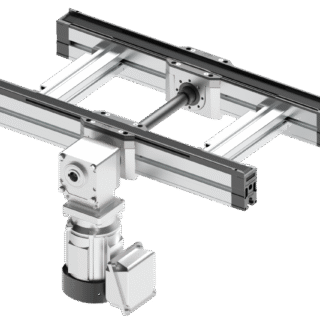
4. How to select drive rollers for labor-saving and high-efficiency operation

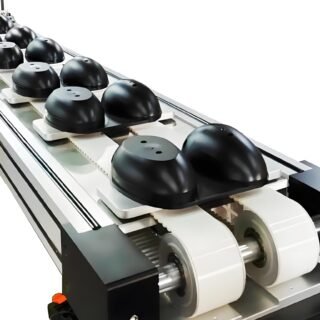
To maximize the performance of drive rollers, priority should be given to large-diameter rollers (common pulley diameters of 30mm and 50mm for conveyors deliver stronger driving force than small ones). Meanwhile, polyurethane coating or rubber coating on the roller surface can increase friction and enhance driving capacity.

Knurling treatment on drive rollers is strictly forbidden. Although knurling can increase friction, it will scratch the belt, accelerate wear and shorten the service life of the conveyor belt.

5. Crowned rollers: cost-effective solution for belt deviation correction

Belt deviation is a common fault of conveying equipment, especially for reversible conveying lines. In scenarios without large axial external force such as lateral feeding, crowned rollers are the simplest and most economical deviation correction option.

With tapered machining at both ends, crowned rollers realize automatic belt alignment without complicated mechanical structures, meeting the deviation correction demands of most general and double-row belt conveyors.

6. High-speed rollers must undergo dynamic and static balance calibration

Due to uneven material structure and machining errors, the center of mass of the roller often deviates from the rotation center. When running at high speed, it will cause equipment vibration, accelerate bearing wear, and even trigger potential safety hazards.

All high-speed belt conveyor rollers must pass dynamic and static balance calibration to ensure stable operation and extend mechanical service life.

7. Diameter selection of head and tail rollers follows professional rules

If the conveyor adopts middle drive instead of end drive, large-diameter head and tail rollers are not recommended.

Large-size head and tail rollers bring no obvious improvement to driving force, but will increase the connection gap with upstream and downstream equipment, easily causing material jamming. Only drive rollers need large-diameter design for higher driving capacity, while head and tail rollers only need to match the overall conveying specification.

결론

Rollers act as the core framework of belt conveyors. The seven key points — idler application, static protection, noise reduction optimization, drive roller selection, deviation correction design, balance calibration and head/tail roller matching — cover the whole process from roller design to on-site application.

Mastering these key points can effectively avoid equipment failure and material loss, improve conveying efficiency and extend equipment service life, ensuring stable and efficient operation of various wide and narrow belt conveyors on production lines.

태그:

관련 뉴스

비디오 라이브러리
팔레트 컨베이어 시스템 | 배터리 생산용 모듈식 컨베이어를 사용한 팔레트 핸들링 솔루션

Vitrans는 10년 이상 팔레트 컨베이어 및 팔레트 이송 시스템 분야를 선도해온 제조업체입니다. 

Vitrans 팔레트 컨베이어 | 벨트 컨베이어

Vitrans는 컨베이어 전문 제조업체입니다. 자동화된 조립 라인을 구축하는 데 어려움이 있으시면 언제든지 문의해 주시면 솔루션을 제공해 드리겠습니다.

공장 내 팔레트 취급 시스템용 비상구 건설을 위한 벨트 컨베이어 리프터 게이트

공장 벨트 컨베이어 시스템을 위한 혁신적인 누적 팔레트 곡선

Vitrans 회사 프로필

다운로드 링크 보내기:

Vitrans 제품 브로셔

다운로드 링크 보내기:

Vitrans 카탈로그-영어

다운로드 링크 보내기: