

Transportadores OEM vs Transportadores Standard: Quando o fabrico personalizado faz sentido em termos económicos
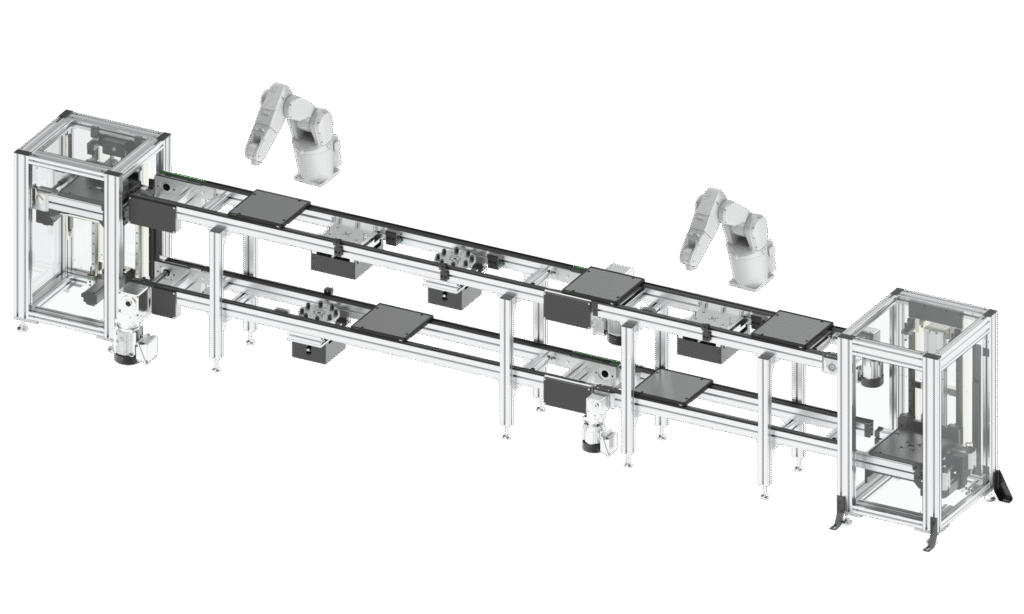
Introdução: A pergunta $50,000
Está a expandir a sua linha de produção e precisa de um novo sistema de transporte. Recebeu dois orçamentos:
- Padrão transportador: $45.000, entrega em 3 semanas, opções de configuração limitadas
- OEM personalizado transportador: $78.000, entrega em 8 semanas, construído exatamente de acordo com as suas especificações
Qual é que deve escolher?
A resposta não é tão simples como “escolher a opção mais barata” ou “personalizado é sempre melhor”. De facto, uma escolha errada pode custar-lhe 2-3 vezes a diferença de preço inicial em perda de produtividade, substituições prematuras e ineficiências do fluxo de trabalho.
Este guia fornece uma estrutura económica clara para determinar quando o fabrico personalizado OEM faz sentido em termos financeiros - e quando os transportadores padrão são a escolha mais inteligente.
Secção 1: Compreender as opções
O que são transportadores padrão?
Definição: Sistemas de transporte pré-concebidos e produzidos em massa com especificações fixas.
Caraterísticas típicas:
- Larguras fixas (12″, 18″, 24″, 36″, 48″)
- Tipos de correias standard (PVC, PU, borracha)
- Gamas de velocidade pré-definidas
- Opções de comprimento limitado (secções modulares)
- Modelos básicos de armação (aço-carbono pintado)
- Combinações de motor e acionamento disponíveis no mercado
Vantagens:
- ✅ Lower upfront cost (30-50% less than custom)
- ✅ Fast delivery (2-4 weeks typical)
- ✅ Proven reliability (designs refined over thousands of units)
- ✅ Easy to replace or expand (standardized parts)
Limitações:
- ❌ May not fit unique space constraints
- ❌ Limited material compatibility (food-grade, cleanroom, etc.)
- ❌ Cannot optimize for specific product characteristics
- ❌ May require workarounds or modifications post-installation
Melhor para: Manuseamento de materiais em geral, linhas de embalagem standard, armazéns com produtos convencionais, projectos com orçamento limitado.
O que são transportadores personalizados OEM?
Definição: Sistemas de engenharia por encomenda concebidos em função dos requisitos específicos da sua aplicação.
Caraterísticas típicas:
- Dimensões personalizadas (qualquer largura, comprimento, altura)
- Materiais especializados (aço inoxidável, plásticos de qualidade alimentar, anti-estáticos)
- Velocidade e capacidade de carga adaptadas
- Integração com o equipamento existente (robots, classificadores, scanners)
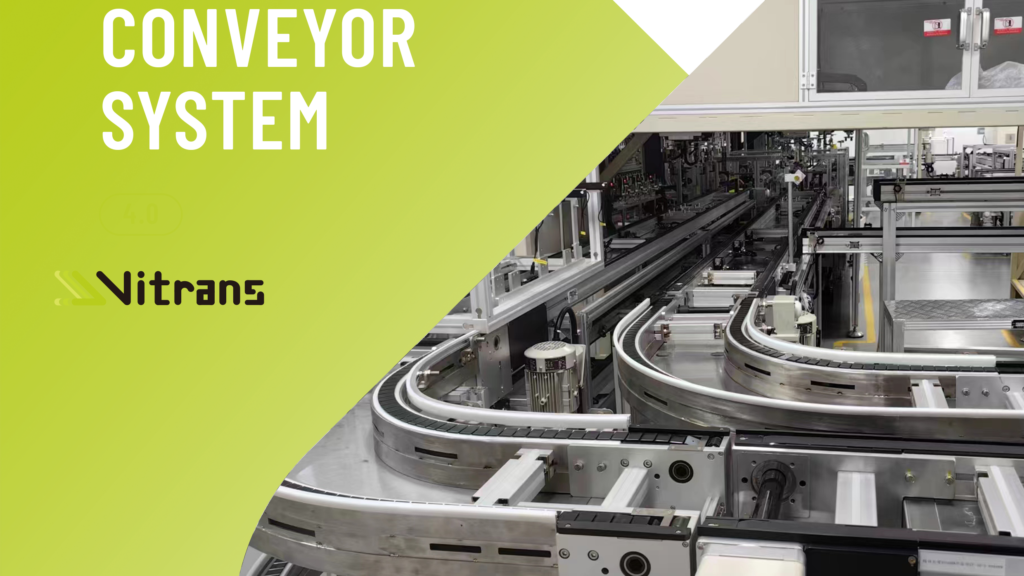
- Caraterísticas especiais (inclinações, declives, curvas, transbordos)
- Certificações específicas do sector (FDA, USDA, à prova de explosão)
Vantagens:
- ✅ Perfect fit for your application
- ✅ Optimized performance and efficiency
- ✅ Seamless integration with existing systems
- ✅ Long-term durability for demanding environments
- ✅ Competitive differentiation (unique capabilities)
Limitações:
- ❌ Higher upfront cost
- ❌ Longer lead times (6-12 weeks typical)
- ❌ More complex maintenance (specialized parts)
- ❌ Requires detailed engineering collaboration
Melhor para: Indústrias especializadas (alimentar, farmacêutica, eletrónica), formas únicas de produtos, restrições de espaço, produtos de elevado valor, instalações automatizadas.
-
 Transportador de correia Série geral
 -
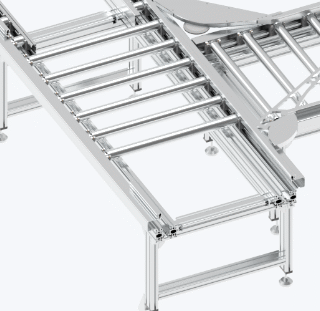 Transportador de rolos empilháveis para serviço pesado
 -
.1-320x320.png) CV2/180 Degree Flat Top Chain Conveyor Curve
CV2/180 Degree Flat Top Chain Conveyor Curve -
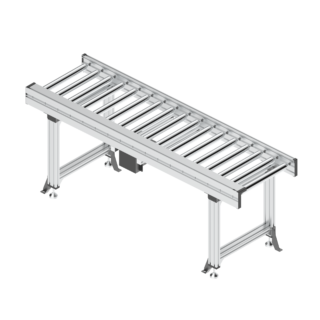 Transportador de rolos para trabalhos ligeiros
 -
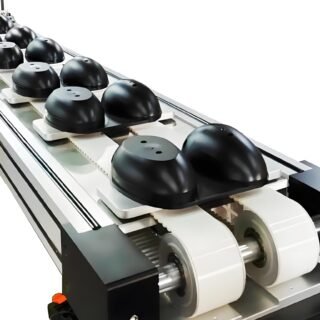 Fixação da correia dentada Transportador
 -
 Transportador de paletes com corrente de rolos AC2 / Transportador de fluxo livre
 -
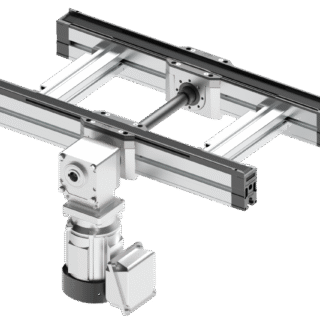 BC2 Transportador de paletes com correia dentada/Transportador de fluxo livre
Secção 2: O quadro de decisão económica
Utilize esta análise de 5 factores para determinar qual a opção que faz sentido em termos económicos para a SUA situação.
Fator 1: Análise do custo total de propriedade (TCO)
Não se limite a comparar preços de compra. Calcular o TCO a 5 anos:
| Componente de custo | Transportador padrão | Transportador personalizado OEM |
|---|---|---|
| Preço de compra | $45,000 | $78,000 |
| Modificações de instalação | $8,000 (pode necessitar de ajustamentos na plataforma) | $0 (concebido para encaixar) |
| Danos/resíduos de produtos (ano 1) | $12,000 (manuseamento imperfeito) | $2,000 (optimizado) |
| Perdas de tempo de inatividade (ano 1-5) | $25,000 (encravamentos/avarias mais frequentes) | $8,000 |
| Consumo de energia (ano 1-5) | $18,000 (motor menos eficiente) | $12,000 |
| Peças de substituição (ano 1-5) | $6,000 | $4,000 |
| Tempo de vida previsto | 7 anos | Mais de 12 anos |
| 5 anos TCO | $114,000 | $104,000 |
Neste cenário: O transportador personalizado permite economizar $10.000 em 5 anos, apesar do custo inicial mais elevado.
A sua ação: Crie a sua própria folha de cálculo de TCO utilizando os SEUS números. Considere:
- Custos de mão de obra para soluções manuais
- Perda de produto devido a manuseamento incorreto
- Custos de paragem de produção por hora
- Tarifas de energia na sua região
- Horas de funcionamento anuais previstas
Fator 2: Avaliação do impacto na produção
Pergunta: Um transportador normalizado irá criar estrangulamentos ou problemas de qualidade?
Calcular o custo do compromisso:
Se for um transportador normalizado:
- Funciona 15% mais lento do que o ótimo → Valor de produção perdido: $X/ano
- Causa mais 2% de danos nos produtos → Custo dos resíduos: $Y/ano
- Requer intervenção manual 3x por turno → Custo de mão de obra: $Z/ano
- Necessita de modificações para se adaptar ao seu espaço → Custo de instalação: $A
Exemplo de cálculo:
Velocidade mais lenta: 15% × $200,000 produção anual = $30,000/perda anual
Danos no produto: 2% × $500.000 valor do produto = $10.000/ano resíduos
Intervenção manual: 3 intervenções × 15 min × $25/hora × 250 dias = $4.687/ano
Modos de instalação: $8.000 de uma só vez

Custo total anual do compromisso: $44.687
Período de retorno do investimento para a atualização personalizada: ($78.000 - $45.000) / $44.687 = 0,74 anos (9 meses)
Regra de decisão: Se o período de retorno do investimento for inferior a 2 anos, a adaptação é economicamente justificada.
Fator 3: Importância estratégica
Nem todos os transportadores são iguais. Considerar factores estratégicos:
Selecionar PERSONALIZADO se:
- Este transportador trata dos seus produtos emblemáticos e de elevada margem de lucro
- É um estrangulamento no seu fluxo de produção
- A qualidade do produto tem um impacto direto na reputação da marca
- Está a construir uma instalação totalmente automatizada “lights-out”
- A conformidade regulamentar exige materiais/designs específicos
Selecionar STANDARD se:
- Este é um equipamento secundário/de reserva
- O produto tem pouco valor ou não é crítico
- Está a testar uma nova linha de produção (pode mudar mais tarde)
- As restrições orçamentais são graves
- O prazo de entrega é o principal condicionalismo
Prémio estratégico: Por vezes, vale a pena pagar mais por equipamento crítico para ter paz de espírito e reduzir os riscos.
Fator 4: Escalabilidade e preparação para o futuro
Pensar para além das necessidades actuais:
Perguntas a fazer:
- O volume de produção aumentará dentro de 2-3 anos?
- Está a planear acrescentar novos tamanhos/tipos de produtos?
- Poderá ser necessário integrar a automatização (robôs, sistemas de visão)?
- Poderão os regulamentos ser alterados, exigindo materiais diferentes?
Vantagem personalizada: Os transportadores OEM podem ser concebidos com:
- Capacidade extra (20-30% acima das necessidades actuais)
- Pontos de expansão modular
- Compatibilidade com a automatização futura
- Accionamentos e controlos actualizáveis
Limitação padrão: Pode ser necessária uma substituição completa se as necessidades se alterarem significativamente.
Impacto económico: Substituir um transportador $45.000 em 3 anos custa mais do que comprar uma unidade personalizada $78.000 que dura 12 anos.
Fator 5: Requisitos específicos do sector
Alguns sectores exigem essencialmente soluções personalizadas:
| Indústria | Porque é que a personalização é muitas vezes necessária |
|---|---|
| Alimentação e bebidas | Conformidade com a FDA/USDA, classificação de lavagem, aço inoxidável, sem pontos de abrigo |
| Farmacêutico | Compatibilidade com salas limpas, documentação de validação, rastreabilidade |
| Eletrónica | Proteção ESD, manuseamento de precisão, controlo de contaminação |
| Automóvel | Capacidade de carga pesada, integração com robótica, durabilidade de ciclo elevado |
| Produtos químicos | Motores à prova de explosão, materiais resistentes à corrosão, encravamentos de segurança |
Custo de conformidade: A utilização de equipamento de série não conforme pode resultar em
- Coimas regulamentares ($10,000-$500,000+)
- Paragens de instalações
- Recolha de produtos
- Acções judiciais de responsabilidade civil
Nestes casos: A personalização não é opcional, é obrigatória.
Secção 3: Abordagem híbrida: O melhor dos dois mundos
Compromisso inteligente: Considere uma estratégia híbrida:
Opção A: Base standard + personalizada Alterações
- Adquirir estrutura e acionamento do transportador standard
- Adicionar tipo de correia, guias, sensores ou controlos personalizados
- Poupanças de custos: 20-30% vs. personalizado completo
- Prazo de entrega: 4-6 semanas
Opção B: Aplicação faseada
- Comece com o transportador padrão para necessidades imediatas
- Design com futuro caminho de atualização personalizado
- Orçamento para atualização em 18-24 meses
- Minimiza o investimento inicial
Opção C: Semi-personalizado de fabricantes flexíveis
- Alguns OEM oferecem linhas “standard configuráveis”
- Escolha a partir de um menu de opções (larguras, materiais, velocidades)
- Mais rápido do que totalmente personalizado, mais flexível do que o padrão puro
- Exemplo: Vitrans FlexSeries (prazo de entrega de 4 semanas, 15 opções de configuração)
Secção 4: Estudos de casos do mundo real
Caso de estudo 1: Fabricante de produtos electrónicos (ganhos por encomenda)
Situação: A linha de montagem de PCB necessitava de um transportador seguro contra ESD com posicionamento preciso.
Orçamento standard: $38,000 (seriam necessários tapetes ESD adicionais e manuseamento manual)Orçamento personalizado: $62.000 (ESD integrado, posicionamento automático, pronto para sistema de visão)
Análise:
- Danos nos produtos devido à eletricidade estática: $18.000/ano (estimativa)
- Mão de obra de posicionamento manual: $22,000/ano
- Retorno personalizado: ($62.000 - $38.000) / $40.000 = 0,6 anos
Decisão: Transportador personalizado. ROI alcançado em 7 meses.
Estudo de caso 2: Distribuição de armazém (Standard Won)
Situação: Separação geral de pacotes para o cumprimento do comércio eletrónico.
Orçamento standard: $52,000 (largura de 24″, velocidade variável, secções modulares)Orçamento personalizado: $89.000 (mesma capacidade, disposição optimizada)
Análise:
- Os produtos são caixas de cartão duráveis (baixo risco de danos)
- Custos de mão de obra relativamente baixos
- Sem requisitos regulamentares especiais
- A disposição permite uma configuração padrão do transportador
Decisão: Transportador standard. Poupança de $37.000 com um impacto operacional mínimo.
Estudo de caso 3: Transformação de alimentos (a personalização era obrigatória)
Situação: A fábrica de transformação de carne precisava de um transportador compatível com a lavagem.
Orçamento standard: $41.000 (aço carbono pintado, motores IP54)Orçamento personalizado: $73.000 (aço inoxidável 304, motores IP69K, aprovado pela USDA)
Análise:
- O transportador normal NÃO passaria na inspeção do USDA
- As instalações não poderiam funcionar sem equipamento conforme
- Risco regulamentar: ilimitado (encerramento até estar em conformidade)
Decisão: Transportador personalizado. Nem sequer uma pergunta - a conformidade não é negociável.
Secção 5: Matriz de decisão
Utilize esta referência rápida para orientar a sua escolha:
| Cenário | Recomendação | Justificação |
|---|---|---|
| Orçamento apertado, objetivo geral | Padrão | Minimizar os custos iniciais |
| Produtos de elevado valor ou frágeis | Personalizado | Reduzir as perdas por danos |
| Indústria alimentar/farmacêutica/regulamentada | Personalizado | Requisitos de conformidade |
| Restrições de espaço ou disposição invulgar | Personalizado | Ajuste e integração |
| Produção temporária ou piloto | Padrão | Flexibilidade para a mudança |
| Instalação totalmente automatizada | Personalizado | Integração e fiabilidade |
| Necessidade de uma implantação rápida (<4 semanas) | Padrão | Prazo de entrega crítico |
| Operação estratégica de estrangulamento | Personalizado | Maximizar o rendimento |
| Baixo volume, baixa criticidade | Padrão | Desempenho adequado |
| Planear a automatização futura | Personalizado | Preparar o futuro |
Conclusão: Fazer a escolha económica, não a emocional
A resposta correta depende dos SEUS números e não de conselhos genéricos.
Faz isto agora:
- Obter orçamentos para as opções padrão e personalizadas
- Construir um modelo de TCO a 5 anos utilizando o quadro acima
- Calcular o período de recuperação do prémio personalizado
- Considerar factores estratégicos para além dos puramente económicos
- Tomar uma decisão baseada em dados
Recordar: O transportador mais barato nem sempre é o mais económico. Mas o mais caro também não é automaticamente a melhor escolha.
Ação
Precisa de ajuda para avaliar a sua aplicação específica? Vitrans oferece consultas de engenharia gratuitas sem pressão de vendas. Analisaremos os seus requisitos, forneceremos opções padrão e personalizadas e apresentaremos projecções honestas de ROI - para que possa tomar a melhor decisão para o seu negócio.
📧 Email: qingsong.xu@vitrans.cn📞 Telefone: +86 18027652537🌐 Website: www.vitrans-conveyor.com
Descarregar: https://www.vitrans-conveyor.com/rd-labs/technical-papers/