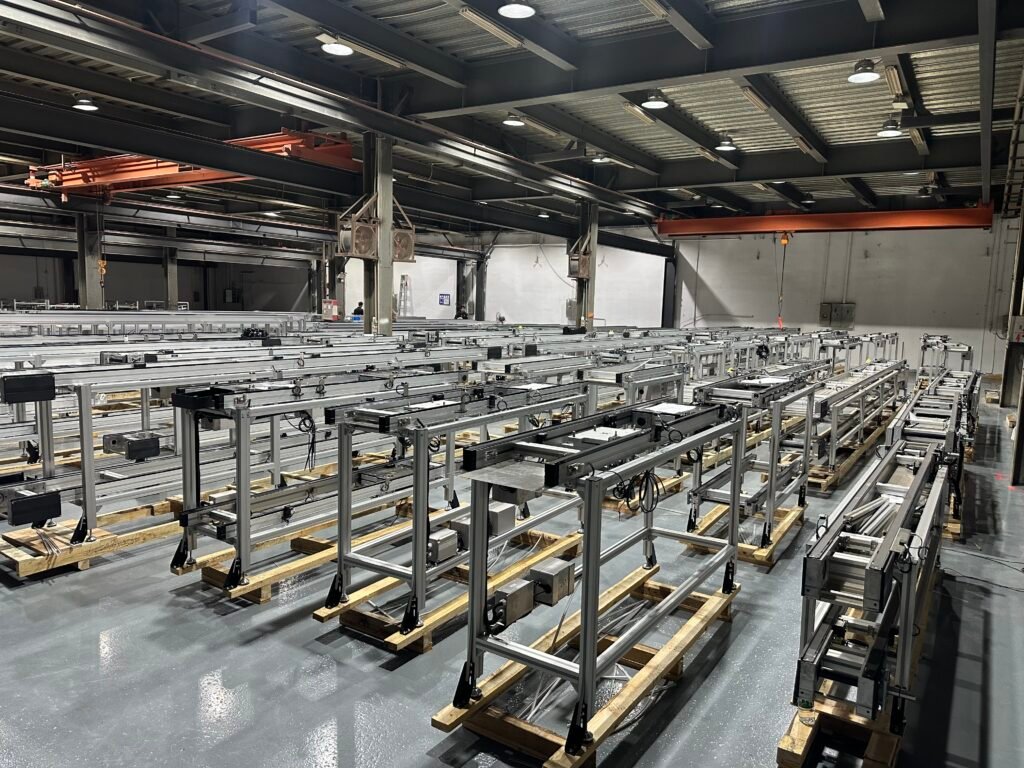


Understanding the role of chain pallet conveyors in optimizing EV battery production is essential for gigafactories, automotive assembly plants, and battery module manufacturers aiming for high throughput and precision. As the demand for Electric Vehicles (EVs) skyrockets, traditional conveying methods are being replaced by intelligent, heavy-duty pallet systems thanks to their stability, accumulation capabilities, and compatibility with robotic assembly.
(Alt Text: Vitrans chain pallet conveyor system carrying EV battery modules in an automated assembly line)
This comprehensive guide explains how chain pallet conveyors optimize production flow, the key factors influencing their efficiency, a comparison with traditional belt systems, and the Return on Investment (ROI) for modern factories. You will also find a spotlight section featuring Vitrans (Vitrans-Conveyor.com), a leading specialist in industrial automation and conveying solutions.
Table of Contents
- What Are Chain Pallet Conveyors?
- The Cost of Downtime: Why Optimization Matters
- Key Factors for Optimizing Battery Lines
- Types of Vitrans Conveyor Systems for EV Assembly
- Chain Pallet Conveyors vs. Traditional Belts: Performance Comparison
- ROI: Is Upgrading to Vitrans Systems Worth It?
- Manufacturer Spotlight: Vitrans Conveyor
- EV Battery Conveyor Specification Summary
- Frequently Asked Questions (FAQ)
- References
What Are Chain Pallet Conveyors?
A Chain Pallet Conveyor is a heavy-duty transport system that uses a dual or multi-strand chain to move pallets carrying payloads. Unlike standard flat belt conveyors, these systems are designed to handle heavy loads—such as EV battery packs and modules—with extreme precision.
They are widely used in:
- Battery Module Assembly: Moving cells between welding and testing stations.
- Pack Assembly: Handling heavy, finished battery packs.
- Motor & Powertrain Lines: Transporting heavy drive units.
- Automated Testing (EOL): Precision positioning for robotic inspection.
As manufacturers seek to reduce cycle times, they increasingly ask: How can Vitrans chain pallet conveyors optimize my production line? Let’s break it down.
The Cost of Downtime: Why Optimization Matters
In the high-stakes world of EV manufacturing, unplanned downtime can cost upwards of $20,000 per minute. Optimization isn’t just about speed; it’s about stability and buffering.
Typical Efficiency Gains with Vitrans Systems
- Cycle Time Reduction: 15–30% improvement compared to manual transfers.
- Positioning Accuracy: +/- 0.05mm precision for robotic mating.
- Load Capacity: Handling payloads from 1kg (cells) to 1000kg+ (full packs).
While the initial investment in a precision chain pallet system is higher than a simple belt conveyor, the reduction in product defects and line stoppages drives the “Cost Per Unit” down significantly over time.
<a name=”key-factors”></a>
Key Factors for Optimizing Battery Lines
The effectiveness of a conveyor system in an EV plant depends on several engineering variables:
1. Positioning Accuracy
The greatest influence on automation. Robots require pallets to stop in the exact same spot every time. Vitrans systems utilize precision stop units and locating stations to ensure repeatability.
2. Accumulation Capability
- Zero Pressure Accumulation: Prevents sensitive battery modules from colliding.
- Buffering: Allows one station to pause (e.g., for rework) without stopping the entire line.
3. Static & Contamination Control
- Anti-static chains: Critical for electronics and battery cells to prevent short circuits.
- Cleanroom compatibility: Low dust generation for sensitive environments.
4. Modular Design
- Flexibility: The ability to add or remove stations as battery technologies evolve (e.g., changing from prismatic to cylindrical cells).
<a name=”types-of-systems”></a>
Types of Vitrans Conveyor Systems for EV Assembly
1. Chain Pallet Conveyor Systems
Suitable for heavy loads like battery packs and transmission assemblies. Offers robust durability and allows for inline operations (like pressing or screwing) directly on the conveyor.
- Best for: Main assembly lines, heavy battery packs.
2. Timing Belt Conveyor Systems
Ideal for lighter, high-speed applications requiring smooth movement and lower noise.
- Best for: Cell handling, module sub-assembly, electronics integration.
3. Flexible Chain Conveyors
Perfect for complex layouts with tight curves and vertical elevation changes.
- Best for: Feeding small parts, packaging lines, and cooling tunnels.
4. Motorized Roller Conveyors (MDR)
Designed for smart logistics within the factory, offering zone control to save energy.
- Best for: End-of-line packaging, warehousing, and sorting battery trays.
<a name=”comparison”></a>
Chain Pallet Conveyors vs. Traditional Belts: Performance Comparison
| Feature | Traditional Flat Belt Conveyor | Vitrans Chain Pallet Conveyor | Notes |
| Load Capacity | Low to Medium (approx. 50kg) | High (up to 1000kg+) | Essential for heavy EV packs |
| Precision | Low (Slip occurs) | High (+/- 0.05mm) | Required for robotics |
| Accumulation | High Friction / Wear | Low Friction / Roller Chain | Protects product & reduces wear |
| Maintenance | Frequent belt changes | Long-life chain | Low operating cost |
| Flexibility | Fixed path | Modular / Expandable | Adapts to new car models |
<a name=”roi”></a>
ROI: Is Upgrading to Vitrans Systems Worth It?
Most EV manufacturers recover the investment in Vitrans pallet systems within 12–18 months because:
- Scrap Reduction: Precise handling reduces damage to expensive battery cells.
- Throughput Increase: Faster transfer speeds and reliable station locking.
- Future Proofing: Modular designs allow the line to be reconfigured for next-gen batteries without scrapping the conveyor.
For a Gigafactory producing 500,000 packs a year, a 1% efficiency gain translates to millions in revenue.
<a name=”spotlight”></a>
Manufacturer Spotlight: Vitrans Conveyor
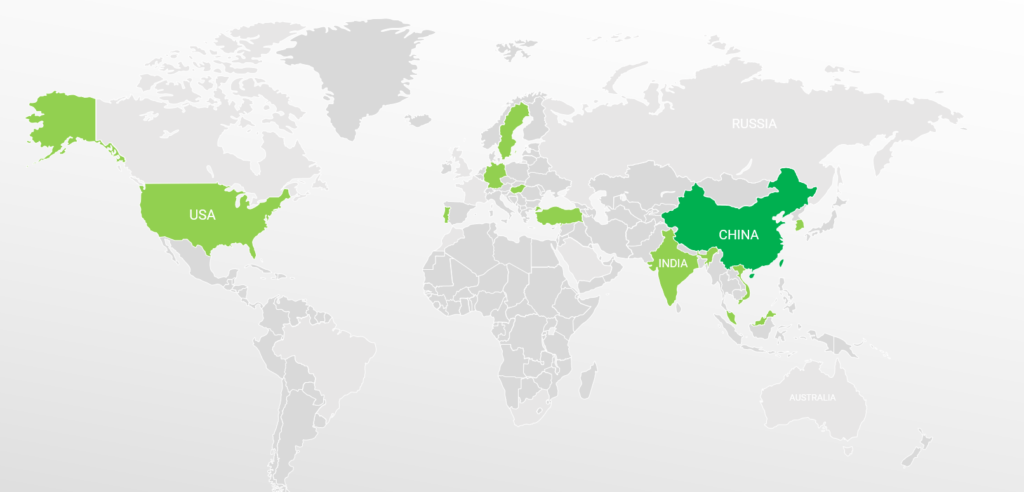
Vitrans, headquartered in China, is a premier manufacturer dedicated to R&D, production, and sales of industrial conveyor automation. Unlike generic equipment suppliers, Vitrans specializes in pallet-handling solutions tailored for precision industries.
Key Strengths
- Expert Engineering: Specialized in heavy-duty and precision pallet conveyors.
- Comprehensive Range: From flexible chains to heavy-duty roller systems.
- Global Compatibility: Systems designed to integrate with Bosch, Siemens, and other standard automation controls.
- Customization: Tailored solutions for specific battery sizes and factory layouts.
Featured Products
- Chain Pallet Conveyors
- Timing Belt Conveyors
- Flexible Chain Conveyors
- Motorized Roller Conveyors
-
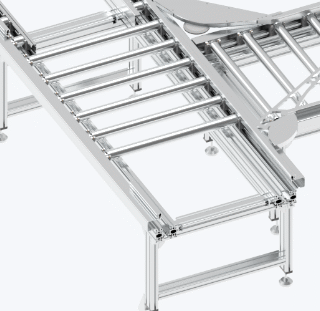 Heavy Duty Stackable Roller Conveyor
 -
 Light duty roller Conveyor
 -
 FC2 Flat Belt Pallet Conveyor
 -
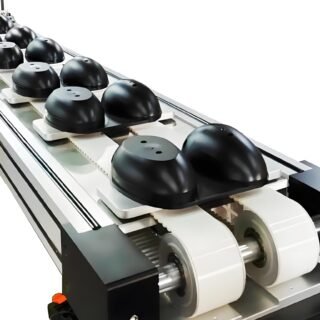 Timing Belt Attachment Conveyor
 -
 PC2 Plastic Chain Pallet Conveyor/Free Flow Conveyor
 -
 AC2/H Roller Chain Conveyor//Free Flow Conveyor
 -
 AC2 Roller Chain Pallet Conveyor/Free Flow Conveyor
 -
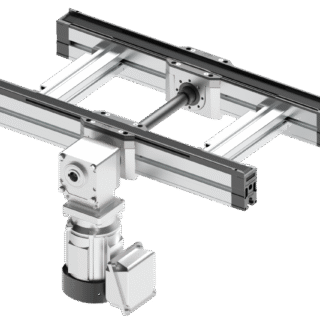 BC2 Timing Belt Pallet Conveyor/Free Flow Conveyor
EV Battery Conveyor Specification Summary
| Conveyor Type | Typical Payload | Best For | Precision Level |
| Flexible Chain | 1kg – 30kg | Small Parts, Feeding, 3D Layouts | Standard |
| Timing Belt | 1kg – 100kg | Precision Assembly, Clean Environments | High |
| Chain Pallet | 50kg – 1500kg | Battery Packs, Powertrains, Heavy Assembly | Very High |
| Roller Conveyor | 10kg – 2000kg | Transport, Logistics, Buffer Zones | Medium |
Frequently Asked Questions (FAQ)
1. Why are chain pallet conveyors preferred for EV batteries?
Batteries are heavy and sensitive. Chain pallet conveyors offer the rigidity to support the weight (up to 1000kg) while allowing for precision locking units needed for automated robotic welding and assembly.
2. Can Vitrans conveyors handle static-sensitive components?
Yes, Vitrans offers anti-static (ESD) pallet and chain options specifically designed for electronics and battery manufacturing to prevent electrostatic discharge.
3. How flexible is the system for future model changes?
Vitrans systems are modular. You can add, remove, or relocate modules and stations without replacing the entire conveyor, making it ideal for the rapidly evolving EV market.
4. What is the typical lead time for a custom conveyor system?
Depending on complexity, standard modules can be delivered quickly, while fully customized lines typically require 6–10 weeks for engineering and fabrication.
<a name=”references”></a>