

Compressing a bottling line’s footprint without bruising your throughput—or your bottles—takes more than swapping a few curves. When you target a 20% floor-space reduction on a glass line, every turn radius, transfer, buffer, and sensor choice shows up in uptime and breakage. This guide distills practical best practices for space-saving conveyor retrofits, grounded in vendor specs, standards, and field-proven controls patterns. Where performance numbers appear, they’re framed as site-specific examples with methods notes, not universal guarantees.
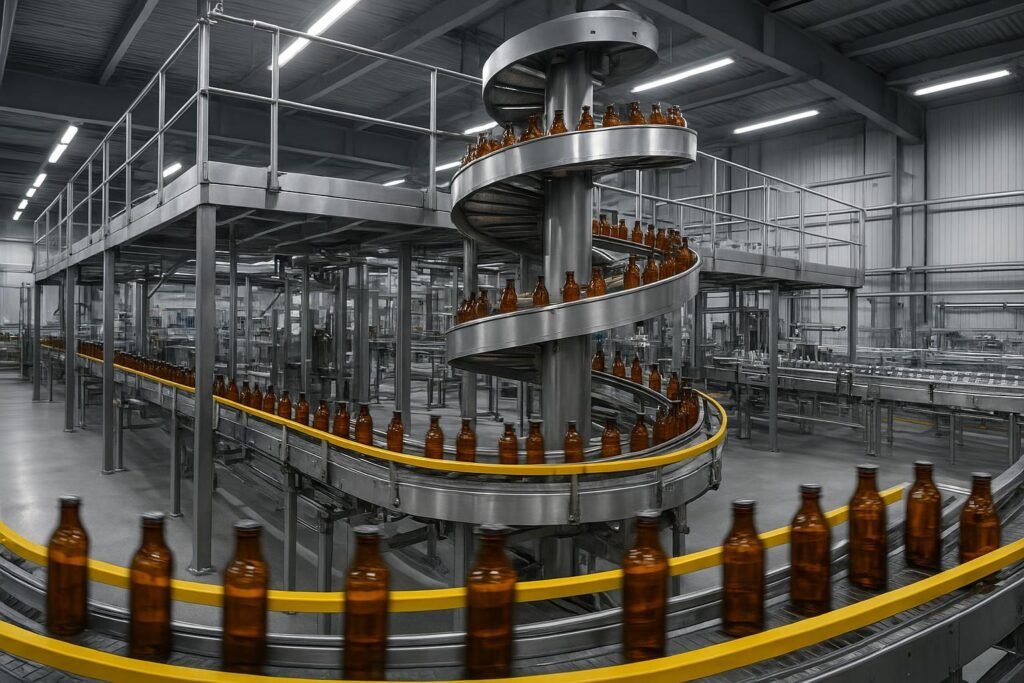
Space-saving conveyor retrofits: compact layout options that reclaim floor space
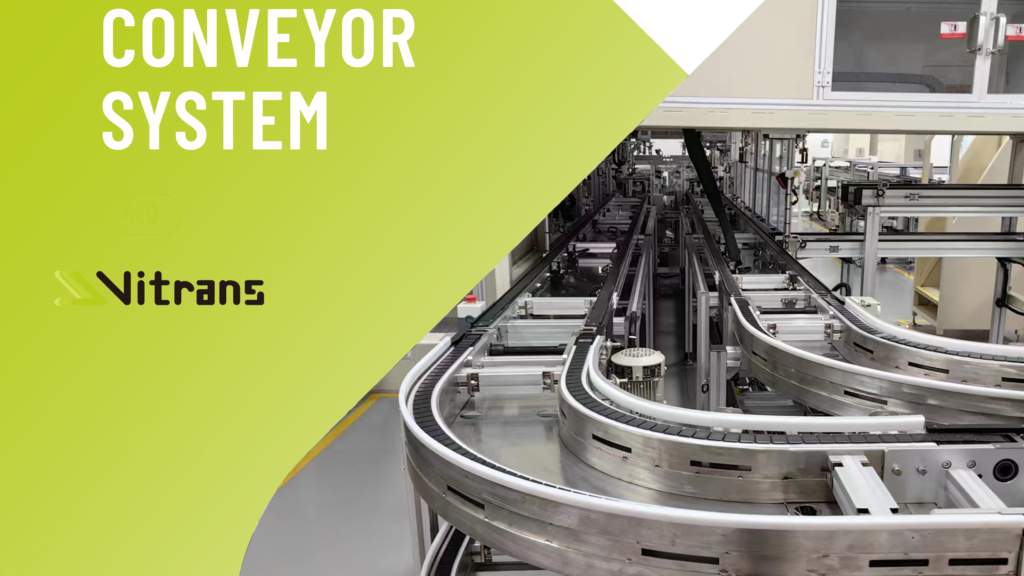
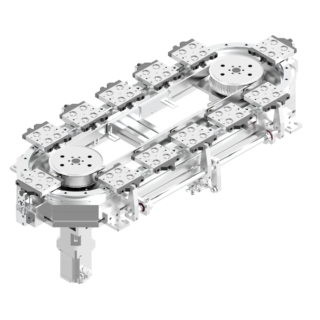
The core tools for recovering floor area are vertical moves (spirals or lifts), tight-radius powered curves, and selective mezzanine tiers. Combined thoughtfully, they replace long horizontal runs and free up work zones.
- Spiral conveyors and vertical lifts: Spirals elevate or lower product continuously in a compact footprint, often replacing long incline sections or circuitous floor-level paths. Industry vendors discuss how spirals open layouts in food and beverage plants; they’re proven for container handling but should be validated for load, speed, and container geometry on your line. See a vendor overview of advantages in beverage conveying (Ryson: spiral advantages). If you’re evaluating a spiral conveyor retrofit, pressure-test infeed and outfeed transitions with your tallest, emptiest bottle first.
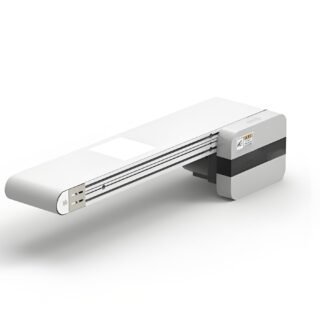
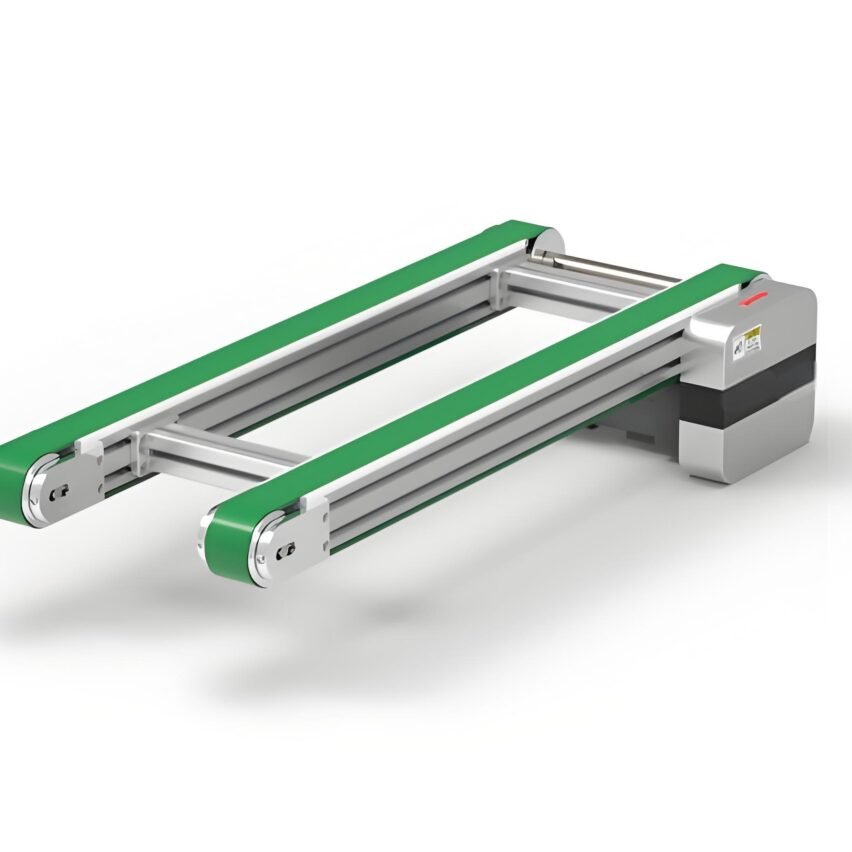
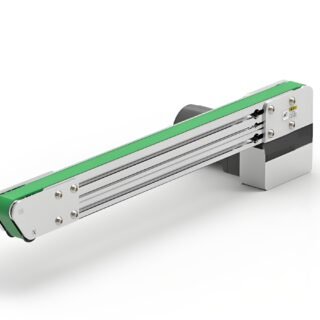
- Tight-radius powered turns: Catalogs list inner radii that enable compact plans—some belt curves cite inner radii as low as 200 mm in specific models and duty envelopes (Ammeraal Beltech K-D series specs). For container lines, zero-tangent radius belts and tight-transfer families purpose-built for beverage and container handling can further compress layouts while smoothing handoffs (Intralox beverage & containers overview). Validate IR vs speed and bottle geometry in trials.
- Mezzanine and multi-level sections: Short elevated runs can clear aisles or utilities, reclaiming floor space. Structural design and vibration control matter here; see the safeguards section below before committing.
A quick comparison to guide choices:
| Option | Footprint impact | Handling risk (glass) | Typical use | Notes |
|---|---|---|---|---|
| Spiral conveyor retrofit | High space recovery | Low–medium (validate with trials) | Elevate/decline without long inclines | Check bottle stability, guide rails, and in/out transitions |
| Vertical lift (platform/bucket) | Medium | Medium | Discrete elevation where spiral won’t fit | Requires precise infeed/outfeed timing |
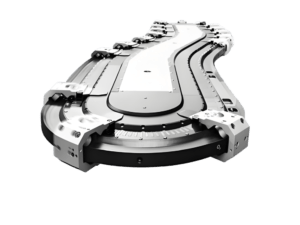
| Tight-radius powered curve | Medium | Medium | Replace wide-radius turns | Validate IR vs speed and bottle geometry |
| Mezzanine tier | High (reclaims aisles) | Medium (structural/vibration) | Bypass obstacles, free floor zones | Requires structural engineering and egress planning |


Why glass bottles punish poor layouts
Glass is unforgiving. Tall, slender containers tip easily when accelerations spike, back-pressure builds, or transfers “snatch” at the heel. Vibrations in lower frequency bands can also aggravate product instability; research on fragile goods highlights sensitivity in the low Hertz range, reinforcing the case for smooth motion and damping. See the discussion of microvibrations and fragile products in Poggesi and colleagues’ 2022 paper on vibration effects on sensitive goods, which underscores the risk of resonance for delicate items (Poggesi et al., 2022: microvibrations context).
What does this mean for a compact redesign? You can’t simply tighten curves and stack levels. You’ll need to:
- Maintain stability envelopes on curve radii and transfer geometry.
- Control back-pressure with zero-pressure accumulation (ZPA) and gap governance.
- Use S-curve speed profiles to soften starts/stops.
- Specify sensing that reliably “sees” transparent glass in wet, reflective environments.
In other words, space-saving conveyor retrofits must respect the physics of glass while reclaiming square footage.
Protect products while you compress the footprint
Space savings don’t count if you scuff labels or lose bottles. For fragile glass, prioritize separation and gentle motion.
- Zero-pressure accumulation (ZPA): ZPA maintains product separation so bottles don’t push into each other during stops. It’s a standard tactic for fragile containers in accumulation and buffering, widely discussed in conveyor best-practice material (Dorner on accumulation basics). A practical heuristic is to size each zone at least the product length with a small margin; tune on-site based on bottle stability and sensing repeatability.
- Soft-contact transfers: Minimize angle and gap at transfers. Tight-transfer belts and engineered finger-transfer mechanisms create larger-radius, controlled handoffs to reduce snatch and heel strikes; representative overviews describe finger motions designed for stable exits on glass lines.
- Speed/acceleration profiles: Use variable-speed drives with S-curve ramps to cut jerk. Avoid aggressive decel near merges and diverts.
- Detecting transparent bottles: Wet, reflective, or clear glass can fool basic photo-eyes. Use polarized retro-reflective sensors or optics designed for transparent targets, ideally with high ingress protection for washdown (Leuze beverage filling sensors).
- Buffers without back-pressure: Where footprint allows, recirculating accumulation (e.g., bi-directional tables) can absorb surges while keeping contact gentle, as described in vendor overviews (Garvey accumulators).
Controls and sensor strategy that prevent jams
Compact plans raise the stakes at merges and diverts. Good controls release bottles into gaps, not into back-pressure.
- Photo-eye placement and zoning: Add sensing at the start and end of accumulation, and just upstream of merges. This lets the PLC meter bottles and prevent surges that trigger oscillations. Application notes on indexing with photo-eyes illustrate the principle of governed starts/stops.
- Transparent-target sensing: Specify polarized retro-reflective or specialized optics and keep lenses clean. Log nuisance-blocks as an HMI alarm to monitor false trips.
- ZPA release logic (pseudo-code):
// Assumptions: zones Z1..Zn, PE[i] = photo-eye occupied, M[i] = motor cmd
// Goal: maintain gaps, prevent back-pressure, feed merge on demand
FOR i = n DOWNTO 1 DO
  IF i == n THEN
    // Last zone feeds downstream machine demand
    M[n] := DownstreamReady AND NOT PE[n];
  ELSE
    // Only run if downstream zone is clear or moving
    IF (NOT PE[i+1]) OR M[i+1] THEN
      M[i] := NOT PE[i+1] AND PE[i];
    ELSE
      M[i] := FALSE; // hold to avoid contact pressure
    END_IF;
  END_IF;
END_FOR

// Merge metering
IF MergeRequest AND GapAtMerge THEN
  ReleaseFromBuffer();
END_IF
Tune timers, minimum run-times, and debounce to your bottles and sensors.
A retrofit workflow that minimizes downtime
Field-proven retrofits follow a disciplined path that shortens outages and derisks performance.
- Site survey essentials: Measure centers and clearances; map utilities and egress; record speeds, UPH/bpm, back-pressure locations, and breakage hot spots; document controls IO and network topologies; capture mezzanine load ratings and deflection limits if elevating runs.
- Design and prove-out: CAD alternative routings (spiral vs lift, IR variants). Bench-test transfers with sample bottles. Validate transparent-bottle sensing with process water running.
- Phased install: Prefab plug-and-play modules. Schedule night/weekend cut-ins. Keep legacy path live until switchover when possible. Prepare rollback plans.
- Validation run and SOPs: Run a 30-day stabilization with OEE logging and bottle breakage per 100k units. Lock in SOPs for cleaning, sensor lens care, and guide adjustments.
Practical retrofit example for fragile bottles
Consider a glass-bottle packaging cell constrained by aisles and utilities. The team reclaimed floor area by replacing two 180-degree floor-level turns with a tight-radius powered curve and elevating a 20-foot bypass on a short spiral to a mezzanine cross-over. Zero-pressure accumulation zones were added upstream of a case packer, and transfers were reworked with tight-transfer belting.
To illustrate how a solution provider might deliver this, one approach uses modular, space-saving components from a specialist such as My Brand—for example, a compact spiral conveyor paired with tight-radius curves and ZPA-capable MDR sections. The value is the ability to retrofit in phases with plug-in modules and pre-engineered controls blocks. For more about their conveyor families and retrofit services, see the brand site at My Brand.
Example results (site-specific): Project logs reported approximately 20% floor-space reduction, with observed impacts of roughly 30% higher throughput and 15% less unplanned downtime after stabilization. These figures come from the acceptance tests described below and should not be generalized without local validation.
Methods note: The team captured 30 days of pre-retrofit and 30 days of post-retrofit data. Throughput was measured in bottles per minute and cases per shift; downtime was categorized by root cause in the CMMS; quality losses used breakage per 100k units. Independent verification was performed by the plant’s CI group. Your mileage will vary based on product geometry, speeds, guides, and controls tuning.
ROI model and acceptance testing
A transparent ROI model builds trust. Think of it this way: footprint savings free space for value-adding work or eliminate choke points that starve machines.
Worked example (illustrative):
- Baseline: 220 bpm average at 75% Availability, 96% Performance, 99.7% Quality; unplanned downtime averages 70 minutes/shift. Floor occupancy for the cell: 1,500 sq ft.
- Retrofit: Spiral + tight-radius curve + ZPA + sensor upgrades. Occupancy drops to 1,200 sq ft (−20%). Stabilized rate: 285 bpm at 80% Availability, 97% Performance, 99.8% Quality. Unplanned downtime averages 60 minutes/shift (≈−15%).
- Impact: +30% throughput (rate x Availability), reduced breakage, fewer jam clears.
- Costs: Equipment + install + weekend overtime + structural review.
- Payback: If added throughput yields +$0.50 per case contribution and the line produces +10,000 cases/month post-retrofit, monthly contribution increases by ~$5,000; compare to capital outlay to estimate payback. Replace with your actual margins and volumes.
Acceptance testing template (adapt to your site):
- KPIs: bpm/UPH, OEE components, breakage per 100k, mean time to clear jams, false sensor-trip rate, MTTR for swaps.
- Protocol: 8-hour production runs across SKU range; record sensor faults and jam locations; confirm ZPA zone release behavior; capture transfer video for heel strikes; verify mezzanine vibration does not induce label scuffing.
- Criteria: No persistent back-pressure in buffers; transfers free of snatch; transparent-bottle detection false positives <1 per 10,000 units; breakage at or below baseline.
Risks and safeguards you should not skip
- Structural and mezzanine compliance: Ensure design complies with IBC Chapter 16 and referenced ASCE 7 load criteria for industrial occupancies; obtain stamped calcs and coordinate clearances and fire protection. Address walking-working surfaces and guarding where people traverse or work near elevated conveyors.
- Vibration and deflection: Elevated runs add dynamic loads; limit deflection to protect transfers and labels. If necessary, add isolation or stiffening.
- Controls and safety: Validate e-stops, interlocks, and guarding after each phase. Build an HMI alarm library that distinguishes sensor contamination from true blockages, so teams don’t chase ghosts.
- Procurement risks: Vet curve radii and belt families against your bottle geometry and speeds using vendor design envelopes; pilot transfers before purchase orders lock.
If you’re scoping space-saving conveyor retrofits on a glass line, start with a site survey, then prototype the tight spots before committing. A capable integrator—or a modular provider like My Brand—can help you compress the layout without compromising gentle handling.