

Executive Summary
Investing in a flexible chain conveyor is a significant decision that impacts your production efficiency, product quality, and bottom line for years to come. With dozens of manufacturers, hundreds of configurations, and price variations up to 300%, choosing the right system can feel overwhelming.
This comprehensive buyers guide distills 10+ years of Vitrans manufacturing experience into 7 critical factors you must evaluate before purchasing a flexible chain conveyor.
Quick Checklist:
- ✅ Define your product characteristics (size, weight, shape)
- ✅ Calculate required capacity and speed
- ✅ Assess layout flexibility needs
- ✅ Evaluate chain and material compatibility
- ✅ Review drive system options
- ✅ Consider integration and controls
- ✅ Analyze total cost of ownership (not just purchase price)
By the end of this guide, you’ll have the knowledge to specify the perfect flexible chain conveyor for your application—and avoid costly mistakes.
-
 Stainless flexible chain
 -
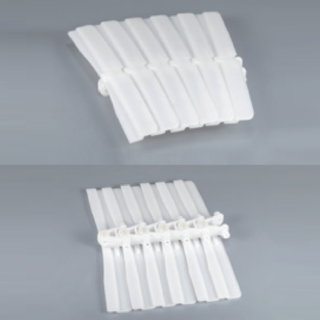 295mm Width flexible chain
 -
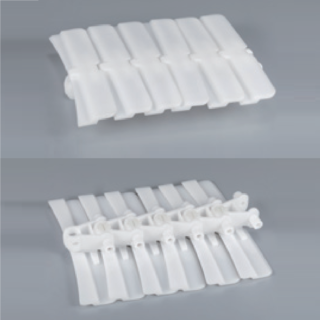 175mm Width flexible chain
 -
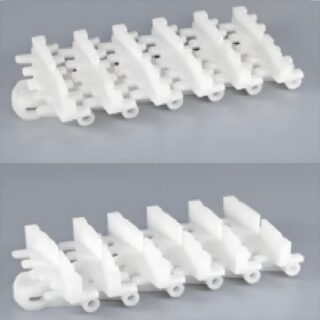 103mm Width flexible chain
 -
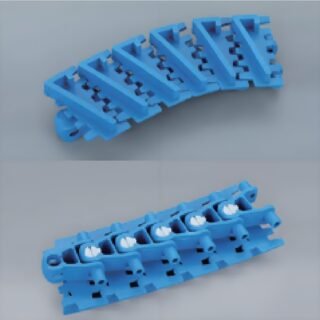 83mm Width flexible chain
 -
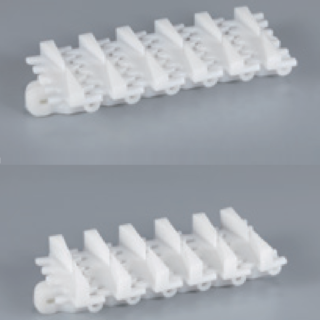 63mm Width Flexible Chain
 -
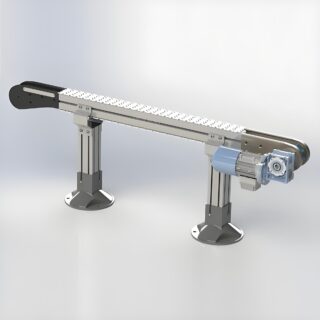 Vitrans Flexible Chain Conveyor
 -
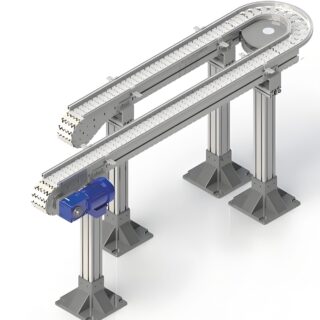 Vitrans Flexible Chain Conveyor | Flexible Pallet Conveyor
 -
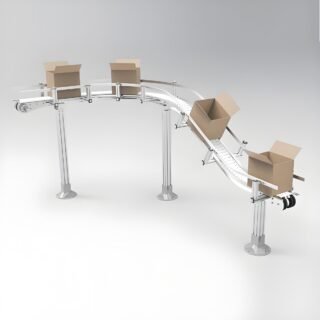 Vitrans Flexible Chain Conveyor | Sliding Conveyor System
Table of Contents
- What is a Flexible Chain Conveyor?
- Factor 1: Product Characteristics
- Factor 2: Capacity & Speed Requirements
- Factor 3: Layout Flexibility
- Factor 4: Chain Type & Material
- Factor 5: Drive System & Power
- Factor 6: Integration & Controls
- Factor 7: Total Cost of Ownership
- Common Mistakes to Avoid
- Vitrans Selection Tool
- FAQs
- Get Your Custom Quote
1. What is a Flexible Chain Conveyor?
Definition
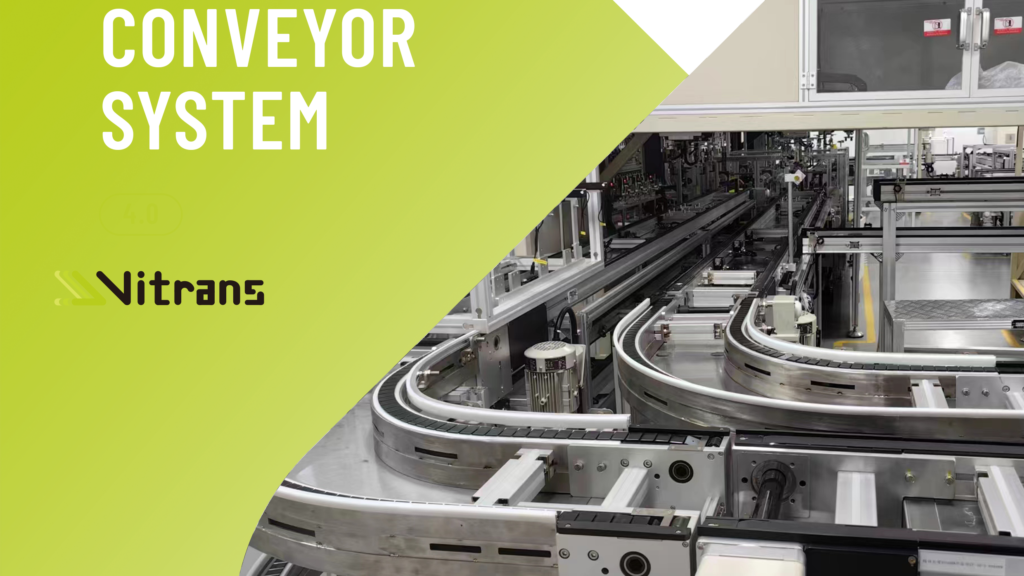
A flexible chain conveyor (also called flex chain conveyor, modular chain conveyor, or plastic chain conveyor) uses interlocking plastic chain links to create a conveying surface that can navigate horizontal curves, inclines, and declines—unlike traditional belt or roller conveyors.
Unique Advantages
✅ Multi-Directional Movement – Navigate corners without transfer stations✅ Product Stability – Solid carrying surface prevents small items from falling✅ Hygienic Design – Easy to clean and sanitize, FDA-approved materials✅ Quiet Operation – Plastic-on-plastic friction is minimal✅ Modular & Expandable – Add or remove sections easily
Typical Applications
| Industry | Application | Why Flexible Chain |
|---|---|---|
| Beverage | Bottle/can conveying | Curves, accumulation, gentle handling |
| Food Processing | Packaging lines | Hygiene, washdown, product stability |
| Pharmaceuticals | Case packing | Clean room, precise positioning |
| Cosmetics | Filling & capping | Smooth transport, no scuffing |
| Logistics | Sortation systems | Multi-directional routing |
Factor 1: Product Characteristics
Product Dimensions & Weight
| Measurement | Why It Matters | Specification Impact |
|---|---|---|
| Length × Width × Height | Determines conveyor width and side guide height | Minimum 3-chain support under product |
| Weight | Affects chain strength, motor power, frame design | Light (<1kg), Medium (1-10kg), Heavy (>10kg) |
| Bottom Surface | Influences chain type and friction | Flat, ribbed, concave, irregular |
Temperature Considerations
| Temperature Range | Recommended Chain Material |
|---|---|
| -40°C to 0°C | Polypropylene (PP) with cold additives |
| 0°C to 80°C | Standard POM (Acetal) |
| 80°C to 150°C | High-temperature POM or PPS |
| 150°C to 250°C | PEEK (expensive but necessary) |
⚠️ Critical Question: Will your conveyor operate in extreme temperatures? Standard chains fail rapidly outside their rated range.
Factor 2: Capacity & Speed Requirements
Calculating Required Capacity
Formula:
Capacity (units/hour) = (3600 × Line Speed) / (Product Length + Gap)
Speed Ranges by Application
| Application | Typical Speed Range | Notes |
|---|---|---|
| Bottle/Cannery | 15-60 m/min | High-speed filling lines |
| Case Conveying | 10-30 m/min | Heavier loads, slower speeds |
| Accumulation | 5-20 m/min | Controlled queuing |
| Precision Assembly | 2-10 m/min | Accurate positioning required |
💡 Pro Tip: Size for peak demand with 20% headroom for future growth.
Factor 3: Layout Flexibility
Curve Capabilities
| Curve Type | Minimum Radius | Typical Applications |
|---|---|---|
| 30° Curve | 300-600mm | Slight direction changes |
| 45° Curve | 300-600mm | Moderate turns |
| 90° Curve | 450-900mm | Corner navigation |
| 180° U-Turn | 600-1200mm | Return loops, space optimization |
Incline/Decline Limits
| Chain Type | Maximum Incline | Requires |
|---|---|---|
| Flat Top | 15° | High-friction chain or cleats |
| GripTop (textured) | 25° | Better grip on products |
| Cleated | 35° | Positive product retention |
Factor 4: Chain Type & Material Selection
Common Chain Materials
| Material | Temperature Range | Best For | Cost |
|---|---|---|---|
| POM (Acetal) | -40°C to +100°C | General purpose, food grade | $$ |
| PP (Polypropylene) | 0°C to +80°C | Chemical resistance, budget | $ |
| PPS | -50°C to +180°C | High-temperature applications | $ |
| PEEK | -80°C to +260°C | Extreme conditions, medical | $$ |
Chain Surface Patterns
| Pattern | Description | Best For |
|---|---|---|
| Flat Top | Smooth surface | General conveying, stable products |
| GripTop | Textured surface | Inclines, slippery products |
| Flush Grid | Open grid pattern | Drainage, airflow, cooling |
| Cleated | Raised ribs | Steep inclines, product separation |
| Side Flexing | Articulated links | Tight radius curves |
Factor 5: Drive System & Power Requirements
Motor Types Comparison
| Motor Type | Pros | Cons | Best For |
|---|---|---|---|
| AC Induction | Cost-effective, reliable | Fixed speed (needs VFD) | Standard applications |
| Gearmotor | Compact, pre-matched | Less flexible | Standalone conveyors |
| Servo | Precise position control | Higher cost | Indexing, synchronization |
| Brushless DC | Energy efficient, quiet | Complex setup | New installations |
When VFD is Essential
- Multiple product types with different speeds
- Synchronization with upstream/downstream equipment
- Gradual acceleration for fragile products
- Remote speed adjustment requirements
Factor 6: Integration & Controls
Control System Levels
| Level | Description | Best For |
|---|---|---|
| Level 1: Basic On/Off | Simple start/stop buttons | Standalone, manual lines |
| Level 2: Variable Speed | VFD with local HMI | Single-line operations |
| Level 3: PLC Controlled | Programmable logic, sensors | Automated lines |
| Level 4: SCADA/MES | Plant-wide monitoring, OEE | Enterprise integration |
Communication Protocols
Ensure compatibility with existing systems:
- Profibus/Profinet: European equipment
- EtherNet/IP: Allen-Bradley ecosystems
- ModbusTCP: Universal, simple
- CC-Link: Mitsubishi systems
Factor 7: Total Cost of Ownership (TCO)
Cost Components Over 10 Years
| Cost Category | % of TCO | Notes |
|---|---|---|
| Initial Purchase | 25-35% | Conveyor, motor, controls |
| Installation | 10-15% | Labor, rigging, commissioning |
| Energy Consumption | 15-20% | Electricity over 10 years |
| Maintenance | 15-20% | Spare parts, labor, downtime |
| Chain Replacement | 10-15% | Typically replaced 2-3 times |
| Downtime Costs | 10-25% | Lost production (often overlooked!) |
Price Comparison: Budget vs. Premium vs. Vitrans
Scenario: 30-meter flexible chain conveyor, medium-duty
| Supplier Tier | Purchase Price | Expected Life | Annual Maintenance | 10-Year TCO |
|---|---|---|---|---|
| Budget (China unbranded) | $8,000 | 5 years | $2,500 | $43,000 |
| Vitrans (China) | $14,000 | 10+ years | $1,200 | $28,000 |
| Premium (European brand) | $28,000 | 15+ years | $800 | $40,000 |
💡 Key Insight: The cheapest option often costs 50%+ more over 10 years due to premature replacement and higher maintenance.
Common Mistakes to Avoid
❌ Mistake 1: Undersizing the Conveyor
Problem: Choosing minimum width to save costConsequence: Product jams, edge damage, frequent stopsSolution: Add 50-100mm clearance on each side
❌ Mistake 2: Ignoring Future Products
Problem: Designing for current product onlyConsequence: Expensive retrofit when product line expandsSolution: Build in 20% extra capacity and width
❌ Mistake 3: Skipping Accumulation Zones
Problem: No buffers between machinesConsequence: Entire line stops when one machine faultsSolution: Add 2-3 meter accumulation sections
❌ Mistake 4: Cheap Chain on Critical Lines
Problem: Using lowest-cost chain to cut budgetConsequence: Chain stretches, breaks, unplanned downtimeSolution: Invest in premium chain for main lines
❌ Mistake 5: Poor Access for Maintenance
Problem: Conveyor installed too close to wallsConsequence: Can’t perform routine maintenanceSolution: Allow 600mm access corridor
Vitrans Flexible Chain Conveyor Selection Tool
Quick Checklist
Step 1: Product Info
- Product dimensions: ___ × ___ × ___ mm
- Product weight: ___ kg
- Operating temperature: ___°C to ___°C
Step 2: Capacity
- Required throughput: ___ units/hour
- Line speed: ___ m/min
Step 3: Layout
- Total length: ___ meters
- Number of curves: ___ (angles: ________)
- Incline/decline: ___°
Step 4: Environment
- Indoor/outdoor: ________________
- Washdown required: Yes/No
Step 5: Budget & Timeline
- Target budget: $________________
- Need delivery by: ________________
👉 Contact Vitrans with Your Checklist
Frequently Asked Questions
Q1: How long does a flexible chain typically last?
A: With proper maintenance, POM chains last 2-5 years in normal conditions. High-temperature or abrasive applications may reduce life to 1-2 years. Regular cleaning and tension checks maximize longevity.
Q2: Can flexible chain conveyors handle wet or oily products?
A: Yes! Choose flush grid or perforated chains for drainage. POM material resists oils and most chemicals. For frequent washdown, specify stainless steel frames and IP65-rated motors.
Q3: What’s the difference between side-flexing and standard chain?
A: Side-flexing chain has articulated links that allow lateral bending, enabling tighter radius curves. It costs 30-50% more but saves floor space.
Q4: Do I need to lubricate flexible chain?
A: Most modern flexible chains run dry (no lubrication). Lubrication can attract dirt and cause premature wear. Exception: Some high-speed bottling lines use water spray for cooling.
Q5: What’s the lead time for custom flexible chain conveyors?
A: Standard configurations: 3-4 weeks. Custom designs: 5-8 weeks. Vitrans offers expedited production (2 weeks) for urgent projects at a 15-20% premium.
Get Your Custom Quote from Vitrans
🎁 Free Consultation Includes:
✅ Application Review – Optimal configuration recommendation✅ CAD Layout Drawing – 2D/3D visualization✅ Detailed Quotation – Itemized pricing with timeline✅ Chain Sample – Free sample kit for evaluation✅ Competitor Comparison – Price and feature analysis
📞 Contact Vitrans Today
Email: sales@vitrans.com
💼 Why 500+ Companies Chose Vitrans:
- 🏭 10+ Years Specialized Experience
- 💰 40-60% Cost Savings vs. European/American brands
- ⚡ Fast Delivery: 3-4 weeks standard
- 🔧 Full Customization
- 🌍 Global Installation Support
- 📜 CE, ISO 9001, FDA Certifications